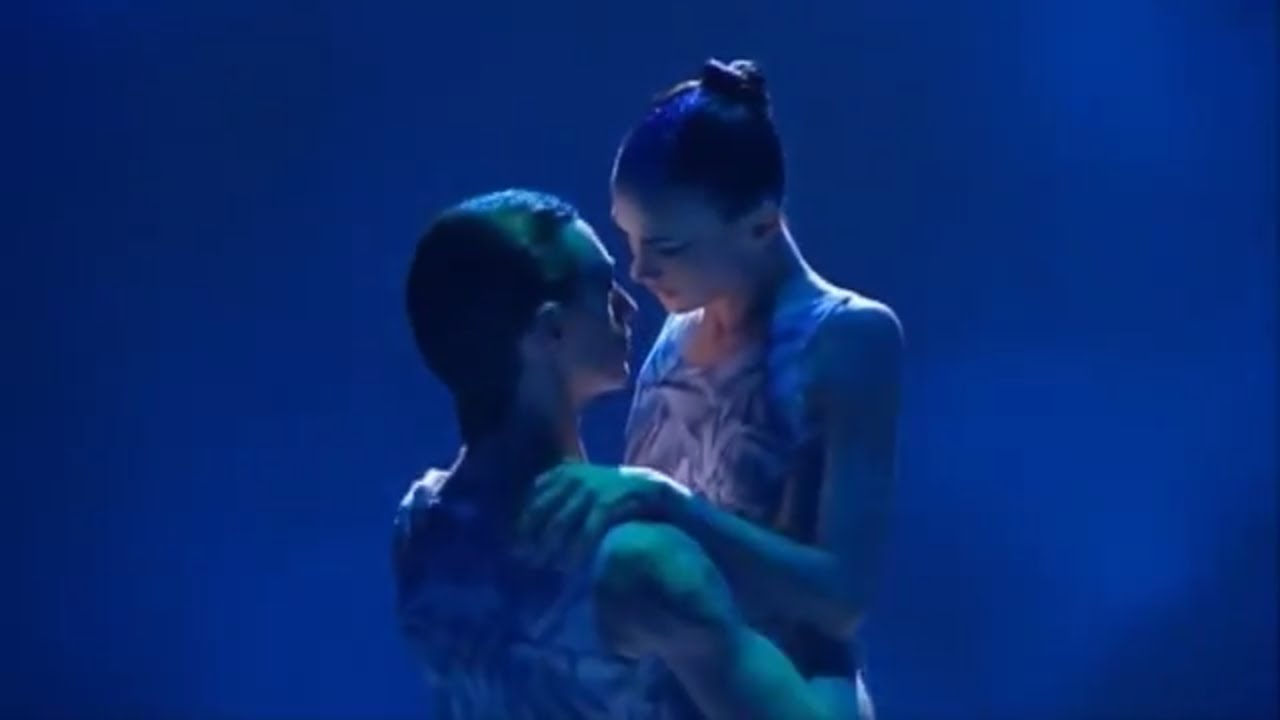

4/3/19 O&A NYC DANCE: Meet Mat Elder- NewSteps (Spring 2019)

Spring 2019 newsteps: a choreographers Series will present it Spring 2019 showcase Thursday April 11 through Saturday 13, 7:30pm at the Chen Dance Center, 70 Mulberry St, 2nd floor in New York City’s historic Chinatown district. Five choreographers Annie Heath, Mat Elder, Erin Bryce Holmes, Tanner Ryan and Spencer Weidie will premiere original works and works in progress.  Continue reading

4/1/19 O&A NYC DANCE: A Converstion with Lloyd Knight

By Walter Rutledge

The Martha Graham Dance Company will begin their New York City season April 2 through April 14 at the Joyce Theater. Continue reading

3/30/19 O&A NYC ITS SATURDAY- ANYTHING GOES: The A to Z of Dance


a-z of dance hero alt IIHIH

Shot on the streets and rooftops of sunny LA, our A-Z of Dance shows you how to set hearts alight and clubs on fire. Float like an Arabesque, spin like a B-Boy, wobble like a Chicken Noodle Soup… it’s time to step up! In a very special project for i-D and Diesel, director Jacob Sutton has captured the world’s hottest dancers walking in the air in their Jogg Jeans and cut-offs.

c41876b3598b09f4957597fc24c69f1a

Lil Buck shows us the way of Memphis Jookin. Super-thighs Nicole the Pole – star of Rihanna’s “Pour It Up” video – takes us to a whole other level. And fresh from the Rick Owens catwalk, the Soul Step team show us how to dance to Le1f. Continue reading

3/29/19 O&A NYC DANCE: Agon – pas de deux ( Heather Watts and Mel Tomlinson)

New York City Ballet principals Heather Watts and Mel Tomlinson perform George Balanchine’s Agon pas de deux. Continue reading

(Repost) 1/30/23 O&A NYC HOLLYWOOD MONDAY: Sepia Cinderella (1947)

Sepia Cinderella (1947) is the second in a series of films produced by Jack Goldberg and Arthur Leonard, made primarily for the 684 theatres (in 1947) that catered exclusively to Black audiences that were kept out, or placed in a special balcony section, in most of the theatres in segregated America. Continue reading

3/21/19 O&A NYC WHAT’S HAPPENING THIS WEEK: March 24- March 31, 2019


It’s the first weekend of spring and time its time to get out and about! We have Warhol in Meatpacking and Jean- Michel Basquiat in the East Village. Dance from Williamsburg in Brooklyn to Westchester Ave. in Da Bronx. And The Grateful Dead share with kids while the Temptations are honored on Broadway. Here are a few of the many events happening in the city that never sleeps, guaranteed to keep you Out and About. Continue reading

3/13/19 O&A NYC DANCE: Marcel Wilson- Ailey II

Marcel Wilson, Jr. is living his dream. A member of Ailey II, the Bronx native will perform March 13 though 17 at NYU Skirball, 566 LaGuardia Place. Continue reading

3/9/19 O&A NYC ITS SATURDAY- ANYTHING GOES: Yanis Marshall- Spice Girls

Yanis Marshall, a Britain’s Got Talent 2014 finalist, is currently touring the world teaching and performing in countries such as Mexico, Argentina, Brazil, Canada, China, Russia, England, Spain, France, and the United States.  Continue reading

3/6/19 O&A NYC DANCE: MOMIX reMIX in Crete- Sputnik (Fellow Traveler)

MOMIX reMIX Sputnik (Fellow Traveler) performed by Nicole Loizides, Steven Marshall, Heather Magee, Rebecca Rasmussen, Paula Rivera, Brian Simerson and Jared Wootan. Choreography by Moses Pendleton and Cynthia Quinn. Continue reading

(REPORT) 10/6/20 O&A NYC BLACK HISTORY MONTH DANCE/REVIEW: Why Talley Beatty’s Stack Up Still Stacks Up

By Walter Rutledge

The Alvin Ailey American Dance Theater’s revival of Talley Beatty’s Stack Up became the undisputed hit of the 2018 New York City season. This posed the question, “What makes a dance a masterwork?” In other words, why does Stack Up still stack up?

Part of the answer is the most unforgiving four-letter word in the English vocabulary TIME. Today in our fast-paced world with its changing social attitudes, need for immediate gratification and public acceptance, has virtually eliminated the critical maturation period. This is the time it takes the public (and critics) to develop the aesthetic acumen to understand and acknowledge that they are in the midst of something new, different and profoundly groundbreaking.

Created for the Alvin Ailey American Dance Theater in 1983 Stack Up become an immediate hit. Jennifer Dunning reviewed Stack Up during the 1983 Ailey 25 season, “Mr. Beatty’s tale of lost innocence is as fresh as if it were being told for the first time.” Now 36 years later Dunning’s comments still ring true; Stack Up had retained a freshness and renewed relevance.

Another element of the ballets’ sustained appeal is Beatty’s innate skill as a movement architect and storyteller. A master craftsmen, Stack Up is visually stunning from every seat in the New York City Center’s proscenium house. Even in the fourth tier the patterns move with the precision of a swiss watch.

The textured construction of the choreography included multiple layered movement sequences happening simultaneously. This created primary action, and both secondary and background movement similar to the configurations used in story ballet classics. Despite Beatty’s repute the success of Stack Up sparked an unexpected comeback.

At age 64 Beatty had achieved choreographic acclaim over two decades earlier with his masterwork The Road Of The Phoebe Snow (1959). Despite his 1977 Tony nomination for Arms Too Short To Box With God, and several ballets in the Ailey repertoire, by the early 80’s Beatty had become a dance dinosaur. Artists such as Elisa Monte (Treading 1981, Pigs and Fishes 1982), Bill T. Jones (Fever Swamp 1983) and Ulysses Dove (Night Shade 1982) had captured the public’s curiosity, forging new ground; while relegating Beatty to the past. The success of  Stack Up revived Beatty’s career with a Frank Lloyd Wright vengeance.

Beatty returned to the loss of innocence theme that propelled The Road Of The Phoebe Snow. Set with a soulful Westside Story flavor “Phoebe” centered around a young men and women who encounter gang violence. In Stack Up the male and female leads are confronted by a drug dealer while navigating the New York City underground club scene. Beatty did not relive his “Phoebe” glory, to the contrary, he did his research to create a new work for a new generation and a new audience.

Better Days, a predominantly Black and Latino gay night spot, renowned for great music, dancing, drinking and plenty of shade. It’s tucked away on 49th Street between 8th and 9th Avenue, an area notorious for strip clubs, prostitution and rat-infested tenements. The diminutive, but fearless sexagenarian (Beatty) became a fixture/voyeur at the club.

Beatty soaked up the music, dancing and atmosphere of the club and neighborhood. Social dances such as the Hustle and emerging hip-hop styles were deconstructed and eventually incorporated into his choreography. In retrospect this was the beginning of the end of an era. The club scene with its rampant drugs use, transient sex and outlandish behavior would eventually be eclipsed by the crack cocaine explosion and the AIDS pandemic.

As the curtain rose on the current production, the Romare Bearden backdrop based on his watercolor Under The Bridge brought us into Beatty’s gritty urban environment. The Bearden backdrop (part a series featured in the 1980 John Cassavetes film Gloria) seemed a little faded and in need of sprucing up. Fortunately, this was the only element of this production in need of a facelift.

From the moment the curtain rises we are immediately pulled into the hustle and flow of the vibrant NYC night culture. Dancers spilled onto the stage introducing themselves; and immediately establishing their characters through both movement and attitude. All with the kind of aplomb best described as “urban cool”.

Yannick Labrun and Constance Stamatiou, the young couple emerged from the chaotic, but deliberate movement mayhem. Originally performed by a hunky Keith McDaniel the tall, lean Labrun made the role his own. With a “wide-eyed” sense of innocence and exuberance abounding, this danseur noble took us on a journey (no… his journey) of seduction and betrayal.

Stamatiou’s impassioned interpretation is much less an ingenue, and more protector and futile voice of reason. Michael Jackson Jr. brought a special energy to the role of the drug dealer. His energetic, yet multi-faceted portrayal revived images of the role’s originator Gary DeLoatch. Ranging from an almost manic “life of the party” ringmaster to an alone and poignant addict, Jackson Jr.’s antagonist evoked both disdain and pathos.

The second section opened with Rockin It, old school hip-hop from the Fearless Four. The dancer’s heads popped through the black backdrop playfully bopped side to side. Just one of the many ingenious theatrical devices that kept the audience “on their toes”.

With an amalgam of movement styles including; Dunham, Graham, Ballet, Jazz and current street/vernacular dances, the Louisiana native created an exciting dance “Gumbo”. The abstract narrative ebbed and flowed like a theatrical rollercoaster of falling and rise action. This was balanced by Beatty’s strong dance theatre prowess; which helped him develop complete and believable characters, and clear and concise scenarios. Standout Jermaine Terry’s subtle and focused portrayal of a little too high street character was spot on! His endearing sense of humor complimented without upstaging.

The final scene takes us to the club complete with a disco mainstay mirror ball. Beatty masterfully builds the work to a frenzied crescendo, ending with an arresting final tableau- blackout! Encompassing the four elements of good storytelling; intrigue, seduction, betrayal and mysticism, Stack Up remains a powerful social commentary, made more prevalent due to the present Opioid crisis.

Alvin Ailey American Dance Theater: The Stack-Up

To watch click YouTube link below