



By Walter Rutledge

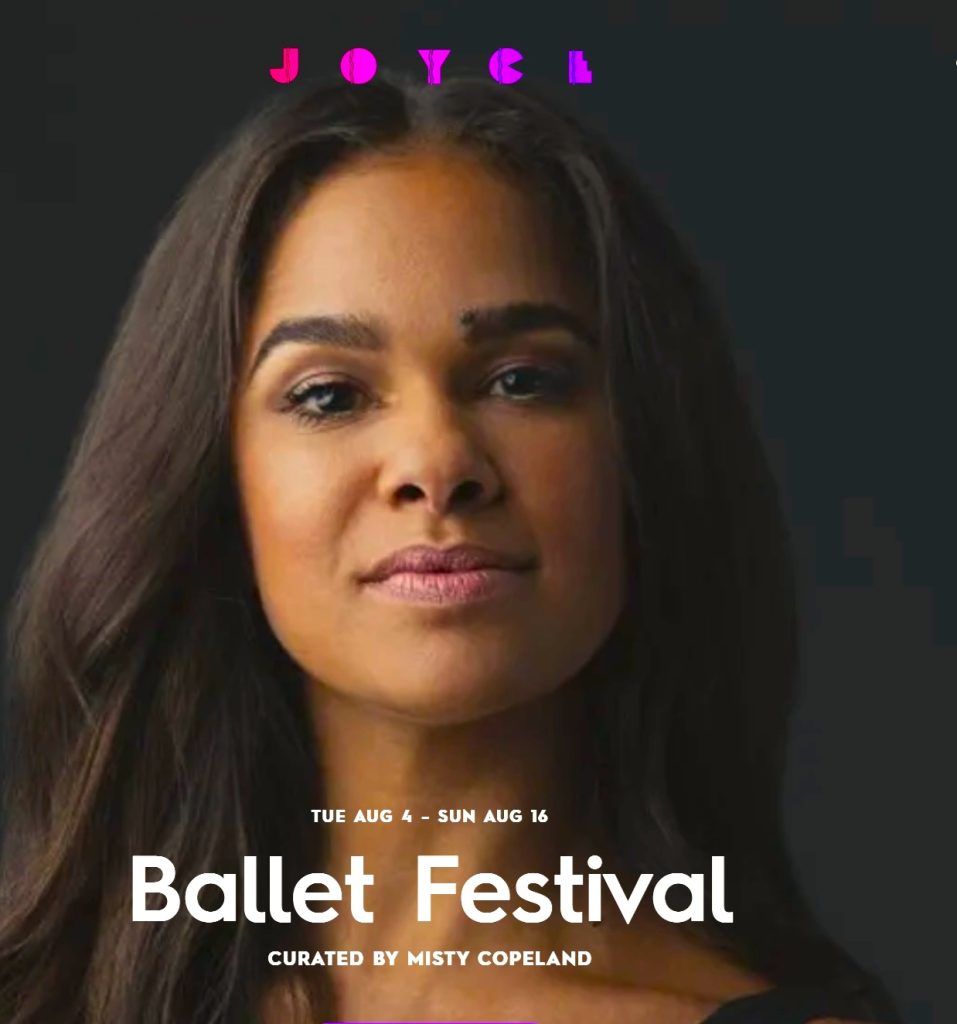
What better way to conclude the Joyce Theater spring/summer 2026 season than with a ballet festival curated by dance treasure Misty Copeland. The two-week, fourteen performance series began Tuesday August 4 and runs through Sunday August 16. Two programs will be presented, one each week.
Copeland has amassed an ensemble of world class performers and internationally acclaimed choreographers that turn every performance into a gala event. The two act audience friendly performance offered a total of eight works consisting of three solos, four duets and a quintet which was the evening closer. The diverse collection of excerpts and small works included a rarely seen modern dance classic, a ballet chestnut, an iconic jazz solo and contemporary works by the next generation of dance makers. The evening was more of a celebratory event than a traditional dance concert, therefore our commentary is more a recap than a review.
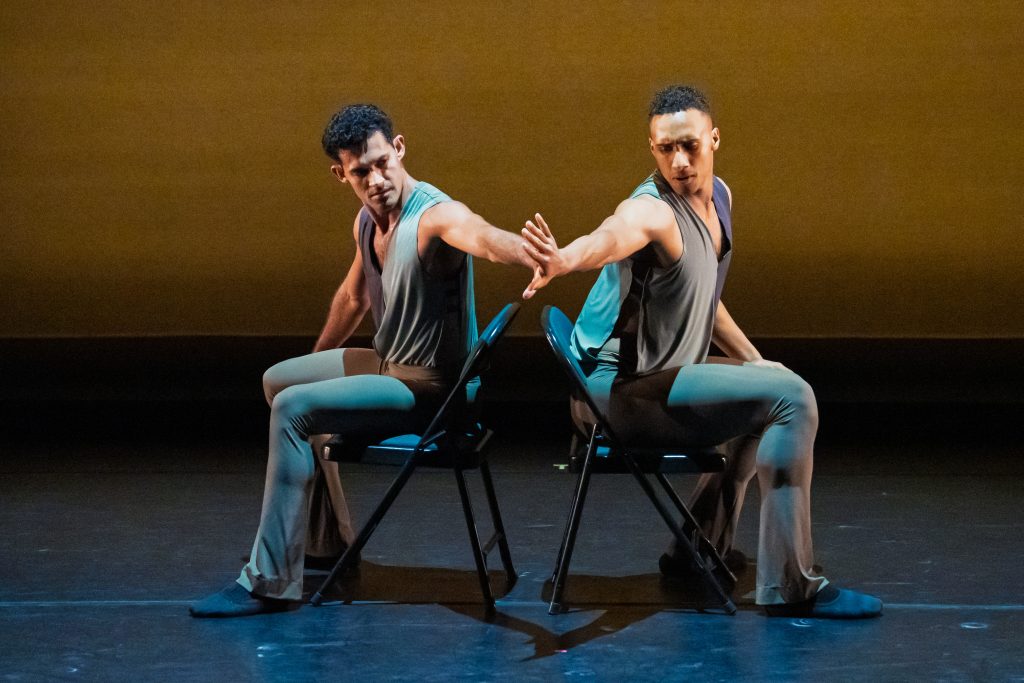
Copeland wisely decided to forgo the usual in front of the curtain opening greetings, salutations and pontifications opting instead to let the evening speak for itself. Ingrid Silva opened the program on a playful note with Interactions a duet performed by Renan Cerdeiro and Elias Re. The duet for two men opened with the men seated on fold chairs and the ensure “interactions” expressed a camaraderie, and friendship void of sexual undertones. The duet was playful and very appealing my only suggestion would be to rework the preparation for the big dramatic catch/lift moment. The preparation telegraphed the lift thus diminishing its power.
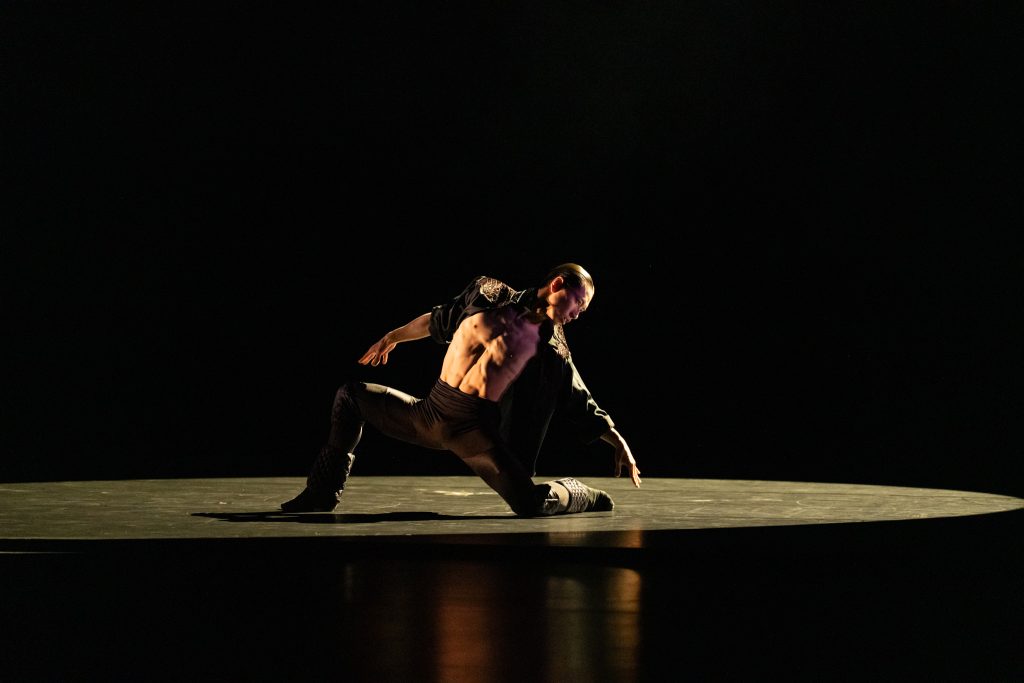
Bob Fosse’s Percussion IV wowed audience earlier this season during the noteworthy Hubbard Street Dance Chicago Joyce season. Company member Shota Miyoshi returned to the Joyce to reprise his impressive performance. Miyoshi balanced a strong technical prowess with a nuanced but powerful stage presence which help buoy the rarely seen masterwork.
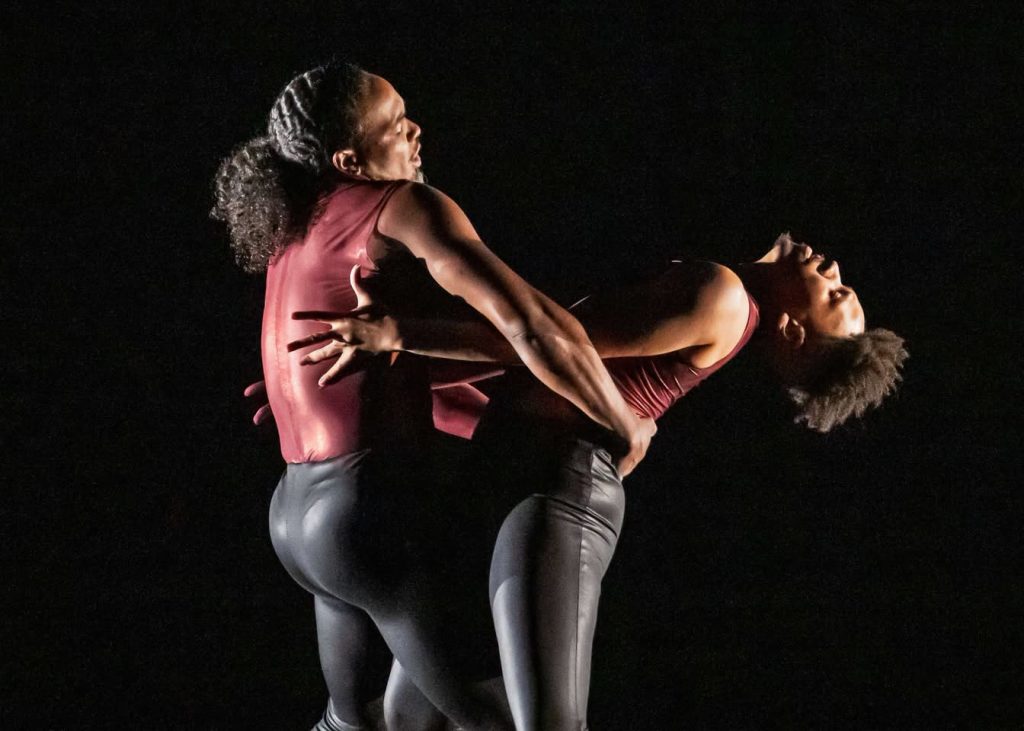
Young Lovers (excerpt) by choreographer Houston Thomas opened with performers Aaron Buchanan and Joe Gonzalez in an embrace. This opening tableau revealed the virtues of gym squats (the costume confirmed that both artists were glute-gifted). Soon the dancers were sailing through conventional partnering, in a kind of “verse pas de deux” each taking turns in the supporting and supportive roles. Brilliant turns, buoyant jumps and effortless entanglements were flawlessly executed, but this impassioned encounter surprisingly was not passionate. The duet ended with the couple embracing in a center down spot as the lights fade to black.
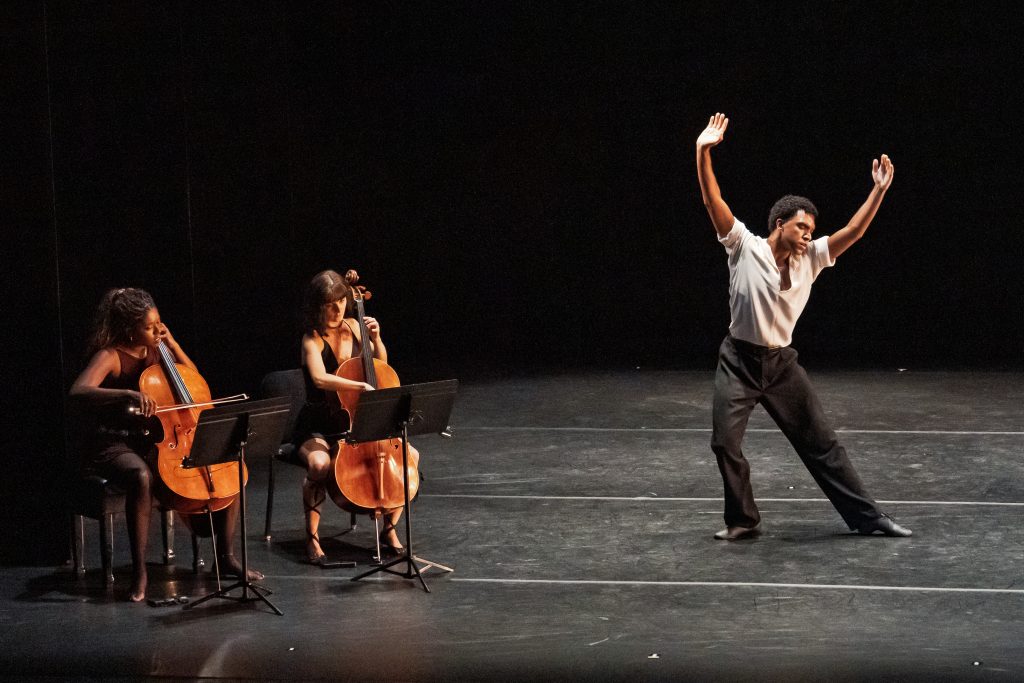
Victor Abreil embodied the spirit of modern dance pioneer José Limón in Sonata for Two Cellos. This 1961 classic has only been performed twice; initially by choreographer Limón and in 2001 by dance phenom Desmond Richardson. Cellists Titilayo Ayangade and Sahara Von Hattenberger performed live on stage forming a triumvirate of movement and music. Limon’s dance statement displayed his astute understanding of choreographic form and process. His use of reoccurring and developed themes in many ways is an homage to his mentor Doris Humphery.
The top of act two is usual reserved for the evening’s show stopping number, and Complexion Contemporary Ballet Artistic Director Dwight Roden’s Ava Maria came prepared to “kick butt and take names”. The work premiered in 1995 just one year after the company made their Symphony Space debut. This early duet aided in establishing Rhoden as a powerful emerging voice in contemporary choreography.
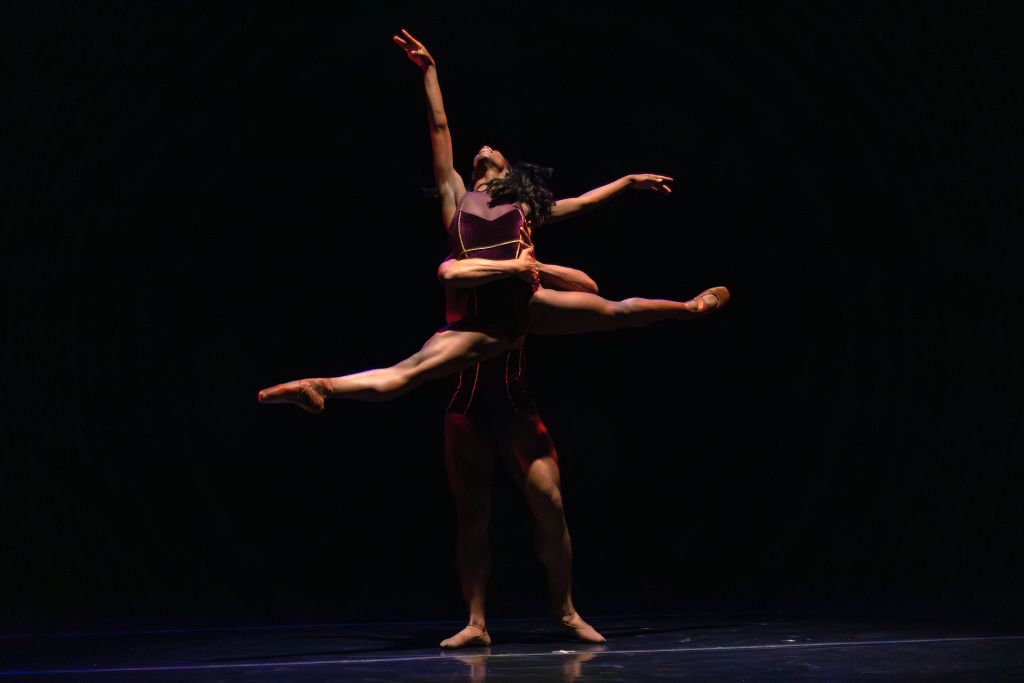
Afro coifed April Watson was dazzling. Her solid technical, gravity defying balances en pointe, Sylvie Guillem-que line and loath, and emotional abandon created an immersive persona. Joe Gonzalez masterfully partnered Watson and complimented her without ever competing. The ballet culminated upstage center in a partnered folding and unfolding that seamlessly brought Watson to a crucifix position. The audience’s standing ovation and sustained curtain call energy is a testament to this seminal works choreographic honesty.
Show Pony by modern dance marvel Kyle Abraham introduced us to Taylor Staley clad in a metallic gold unitard. Stanley’s focused presence enabled us to concentrate on the at times nuanced gesture driven passages, while not overpowering Abraham’s choreographic landscape. Cultural references were peppered throughout the work; which are probably best described as “male dancer realness with a twist”. This was the only work to end with a bump finish. In other words, instead the on music and lights slow fade out together the music rises a dramatic “ta da bam” ending – Thank you Kyle.
Rudolf Nureyev originally choreographed Romeo and Juliet in 1977 for the London Festival Ballet. Nureyev performed the role of Romeo for 25 consecutive performances during the epic 3.5-week opening season. A lavish new version was created for his beloved Paris Opera Ballet in 1984. The ballet was revived in 1995 to honor his passing and remains a cornerstone repertory piece for the Paris Opera Ballet.
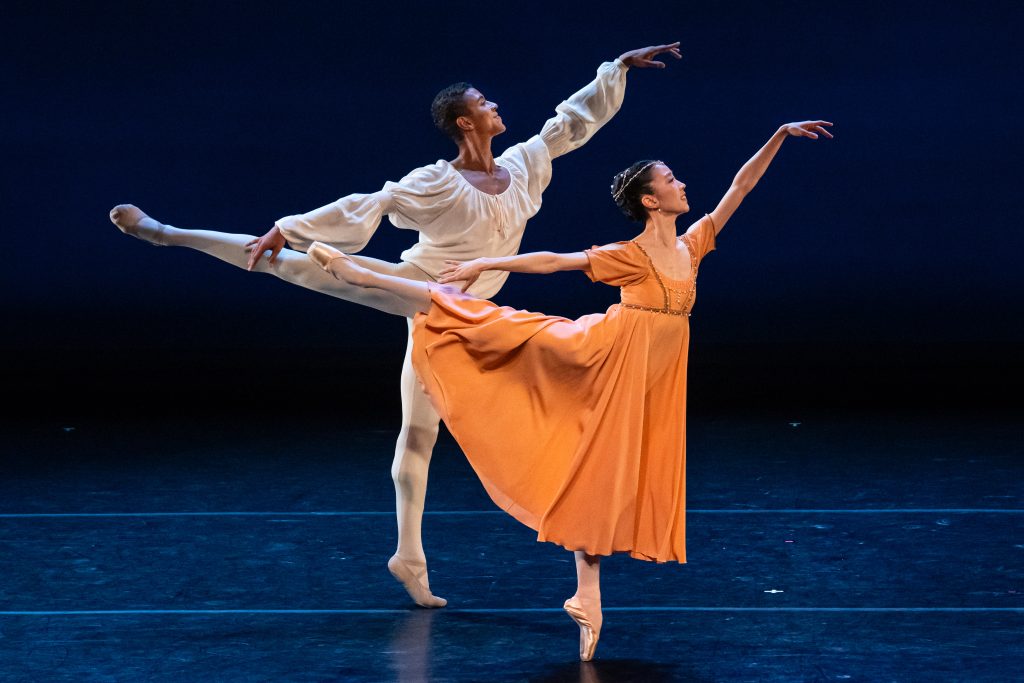
Paris Opera Ballet étoiles Guillaume Diop and Sae Eun Park performed the balcony pas de deux (the balcony scene); and reached beyond the technical rigors to present a multifaceted interpretation of Shakespeare’s ill-fated teenage lovers. Wrapped in the rich music of Sergei Prokofiev and Nureyev’s visceral yet humanistic choreography the duet was a mix of innocence and defiance as the young lovers secretly meet by moonlight.
The evening culminated with Aleisha Walker’s Rising. The female quintet comprised of Madison Brown, Ariana Dickerson, Carly Greene, Delaney Washington (courtesy of Dance Theater of Harlem) and Walker preformed an up-tempo cleanly crafted ensemble finale work. Set to the music of Jody Talbot Walker’s Rising exuded pure Black girl joy.
Like the 2024 ballet festival curated by Calvin Royal III this “company” is a “multicultural masala”- the look of ballet’s future. The high level of artistry presented during the festival will only be rivaled by next weeks performances. The week two roster will include works by Alonzo King, Roland Petit, John Taras, and James Whiteside for more information and ticket reservations visit Joyce.org.







Wonderful review. Thank you so much for sharing your thoughts Walter!!