


Betty Bower, America’s Best Christian is an award-winning parody with over 100,000 hits a week. Mrs. Betty Bowers will tell you how many shopping days until the Apocalypse and offer advise to the biblically uniformed. Continue reading


Betty Bower, America’s Best Christian is an award-winning parody with over 100,000 hits a week. Mrs. Betty Bowers will tell you how many shopping days until the Apocalypse and offer advise to the biblically uniformed. Continue reading
By Walter Rutledge

PS Dance!, an inspiring documentary showcasing the profound effects of dance education in NYC public schools, will air on tri-state public television station NJTV on May 26 at 10:00 p.m. The television program has already aired May 15 on WNET (THIRTEEN), and May 17 on WLIW21. The full film will also be available for online streaming at THIRTEEN.org/specials. Continue reading


“Do not go where the path may lead, but go where there is no path and leave a trail” Continue reading


Multi-Facial is a 1995 short film directed, written, produced, scored by and starring the 22 year old Vin Diesel. The story depicts the professional and emotional issues faced by Mike (Diesel), a multiracial (Italian and African American) actor. The twenty-minute film is semi-autobiographical, drawing on Vin Diesel’s own frustration trying to find work as an actor of mixed ethnicity. The film was noticed by director Steven Spielberg, who would cast Diesel in Saving Private Ryan (1998).

Multi Facial
In the early 1990s, Diesel returned from Los Angeles to New York, frustrated with his failures in Hollywood. Diesel’s mother gave him a copy of Feature Films at Used Car Prices, a book about producing low-budget movies. Diesel said that he found the book “truly empowering,” and it motivated him to make his own movies and wrote the script for Multi-Facial in five days. He produced and directed the film, shooting it over the course of three days for three thousand dollars.

Vin Diesel also wrote and performed music for the film. However, Diesel became disillusioned by the response to the film and stopped work on it. With encouragement from his stepfather, Diesel finished the final edit and screened the film at the Anthology Film Archives in Manhattan. He received a strong response, and the film was accepted for the 1995 Cannes Film Festival. The film was screened to standing-room only crowds.
The closing audition scene in the film is unexpectedly emotional, and effortlessly, it organically concludes the themes built up throughout the film. A great showcase for Diesel, the film works amazingly well cinematically, making it one of the great short films on acting ever made.

NEVER GIVE UP YOUR DREAM !
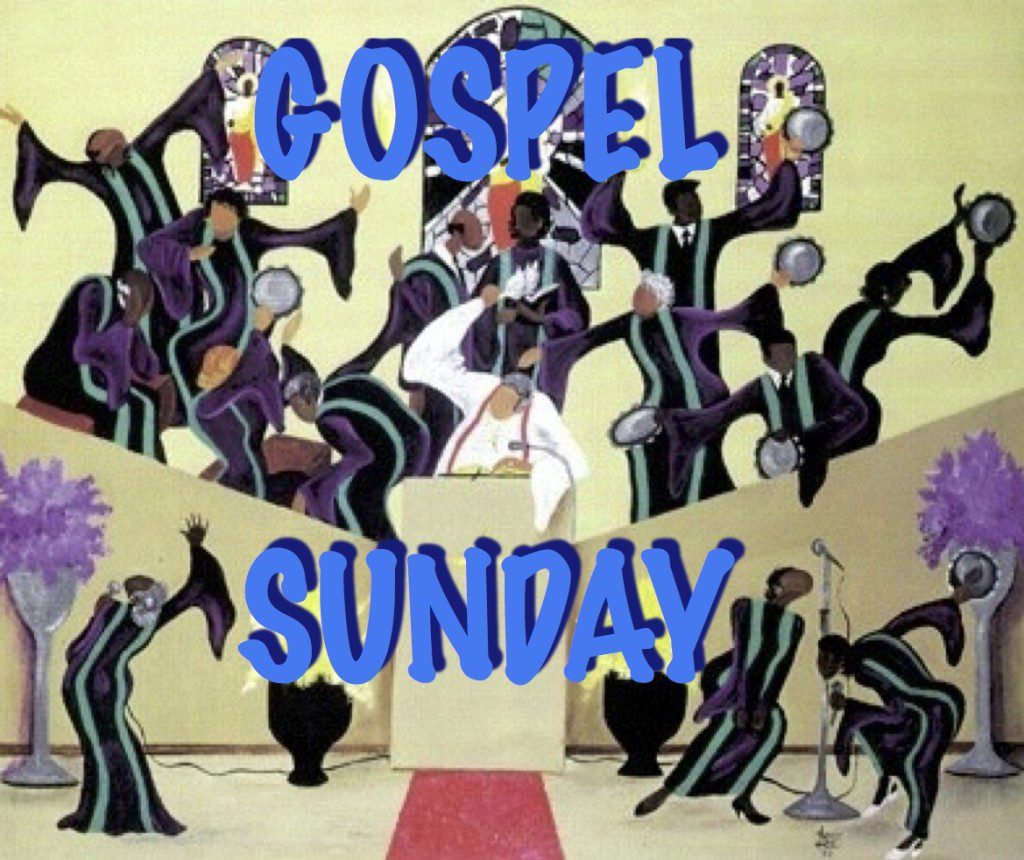

Kimberly Burrell calls her musical style jazz gospel. Though she is comparatively new to the gospel music industry, having only performed since 1989, she has quickly become one of the most influential voices in the genre, often called “this generation’s Ella Fitzgerald.” In 2010, she founded The Love & Liberty Fellowship Pentecostal Overcoming Holy Church, where she serves as Senior Eldress/Overseer-Bishop. Continue reading

It’s finally here! Memorial Day Weekend, the unofficial start of the summer season. And it is also the start of the outdoor grilling season. Grilling just doesn’t need to be confined to chicken, hamburgers and hot dogs, London Broil is an ideal addition to your barbeque menu.
What exactly is a London Broil? A London Broil can be defined two ways- one: is a cooking method; two: a specific cut of meat. London Broil is a flank steak or top round steak dish that, when cooked correctly, is filling, flavorful, and nutritious. Though the London Broil can be cooked in several different ways, marinating and slow-grilling the steak is an easy way to give it a great texture and flavor. Here are a few suggestions to grilling a London Broil.
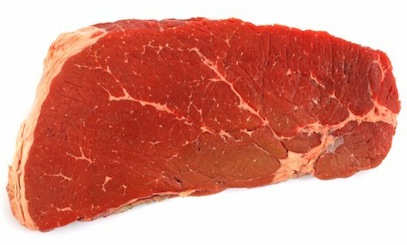
1. Buy good-quality steak.
There’s no way around it: if you use high-quality meat, it’s much easier to get a good-tasting result than if you use mediocre meat. While good chefs can make a tasty London Broil from a cheap piece of meat, this can be challenging, so opt for a high-grade piece of beef whenever you can. If you’re unsure of which cuts of flank steak are the best, talk to your local butcher.
In the U.S., the United States Department of Agriculture grades most beef as “Select”, “Choice”, or “Prime” (in order of increasing quality). “Prime” cuts are generally the most flavorful and well-marbled, so you’ll want to spring for these if they’re available.
Note that some butchers may label a cut of meat called top round steak as London Broil, rather than flank steak.

2. Tenderize your Steak.
Flank steak sometimes has an unfair reputation as a tough, chewy, and flavorless cut of meat. However, this is only true if the meat is poorly-prepared. There are a number of ways to make flank steak tender before you even begin to cook it. The easiest way is to hit it with a tenderizing mallet on a clean cutting board. This breaks up the meat’s tough muscle fibers, giving it a softer texture.
Don’t use powdered meat tenderizers or tenderizing compounds containing extracts from papaya or pineapple fruits. These are tricky to use correctly and can sometimes tenderize the meat unevenly, giving it a mushy exterior and a tough interior.

3. Marinate your Steak.
Banging your flank steak with a hammer isn’t the only way to make it tender. Flank steaks can benefit greatly by soaking them in a marinade before cooking — doing this not only gives the meat a chance to absorb the marinade’s flavor, but also tenderizes it slightly (though this isn’t true 100% of the time).
To help the flank steak absorb its marinade, score your meat before marinating it. Use a sharp knife to make a few X-shaped cuts on the surface of the meat about a half-inch or so deep before applying the marinade. Put the steak in an airtight plastic bag, pour the liquid marinade ingredients over it to cover it and seal the bag. Leave it in the fridge for at least a few hours turning the bag over 2 times.. Usually, about half a day of marinating will allow the meat to absorb as much flavor as possible.
Tequila Jalapeño Marinade
1 cup tequila
1 jalapeño pepper, seeded and chopped
1 cup teriyaki sauce
1 clove garlic
1/4 sesame oil
1/4 sauce Worcestershire sauce
Salt and pepper to taste

4. Heat your grill.
When your meat has marinaded a sufficient length of time, remove it from the refrigerator and let it start to warm to room temperature. While you wait, start your grill. First brush the grill with a light coating of Olive Oil, let it reach a medium heat before you start to cook your meat — you want the grill hot enough to give the meat an initial “searing”, but not so hot that it dries out your meat during cooking.
For optimal tenderness, you want to use long, slow cooking after the initial sear. On a gas grill, this is easy — simply set one burner to “medium” and one to “low”. On a charcoal grill, this is a little trickier — you want to make a large pile of charcoals on one side of the grill and a small one on the other side.
For charcoal grills, don’t forget that the charcoals aren’t ready to cook when they’re flaming, but rather, when they’re ashed-over and exuding an orange glow.


Tchaikovsky Pas de Deux with Patricia McBride and Mikhail Baryshnikov was recorded in 1979. George Balanchine acquired the rights to the music in 1953 and he used it to devise a party piece for a principal couple, amending the choreography each time to suit each pair of dancers. You have to admire Patricia McBride’s diamond-edged footwork including entrechats skimmed millimetres from the floor, or wonder how Baryshnikov’s twelfth consecutive double cabriole can look as easy and elegant as the first. Continue reading
By Walter Rutledge

The 2015 spring Newsteps held its biannual concert May 7th through May 9th at the Chen Dance Center. The series showcased five choreographers for three performances. Choreographers Jonathan Breton, Hannah Cohen, Bree Nasby, Janice Rosario, and Ashley Carter & Vanessa Martinez de Banos were selected through an open audition format. Each choreographer receive feedback from the panelists, a rehearsal space grant, an honorarium, and one on one mentoring with an adviser, which culminated in three public performances.
Hannah Cohen presented a duet entitled Genesis. The work opened with performers Brianna Dixon and Ricky Wenthen intertwined in a sculpted posed. The duet developed the opening tableau into a series of shared weight balanced movement. Cohen’s use of symmetry became a successful device, which enhanced the overall choreographic design.
It girl choreographed and performed by Bree Nasby begin facing upstagewith an isolated movements. Set to an electronic score by Rex the Dog the work quickly turned the isolations into simulated robotic movement phrases. The introduction of a less controlled middle section became the work saving grace. The undulating declaration subtly reverted back to the opening theme to conclude the work.
Janice Rosario presented Unlea(she)d, a cleanly crafted quartet. Performed by Kara Kaplan, Sofia Kezevadze, Deanne Martinez and Rosario, the work had a lyric quality that was occasionally punctuated with bursts of staccato passages. Rosario’s use of theme and development, canon against unison, level and symmetry/asymmetry helped to create a good architectural work with strong design elements.
Jonathan Breton designed his solo work Memories in two sections. The opening section had an abstract narrative feeling, the story of unrequited moved through a blend of ballet, modern and gestural movement. Breton performed with technical confidence and a free unencumbered port de bra. The work ended with Breton retrograding the choreography, performing the movement in reverse to end in the opening pose.
During the transition a shirt left in a center spotlight anchored the sections. The lights dimmed and Breton reappeared bare-chested sequestered in an expansive orange skirt-like drape. A sense of emotional resolve and introspection, echoed through the contrast in the movement, which was all performed without standing.
The program ended with Rights & Rites choreographed by Ashley Carter and Vanessa Martinez de Banos. Dancers Jaclyn Birkner, Jen Chiang, KP, Sofia Sereno, Mikki Shoji and Katie Sloan performed the physical choreography with the proper attack. The choreography relied heavily on unison, which as the central choreographic device has its pros and cons.
Unison provides a power from the en mass movement, but it also requires precision and structural disciple to create climaxes and anti-climaxes throughout the work. Without a strong structure the work will become “one-note” and will not have that rollercoaster effect needed for sustained unison. In this case the work would have benefited from more structural diversity.
Newsteps continues the tradition of nurturing emerging choreographers with an emphasis on process. The series holds auditions twice the next scheduled for October 7, 2015. Choreographers interested in applying contact Chen Dance Center at (212) 349-0438.

How Can I Ease the Pain is a song by Lisa Fischer, from her album So Intense. In 1992 the single won a Soul Train Music Award for Best R&B/Soul Single, Female and it also won a 1992 Grammy Award for Best Female R&B Vocal Performance. The hit song spent two weeks at number-one on the U.S. Billboard Hot R&B/Hip-Hop Songs chart and is Fischer’s biggest and most well-known hit. Continue reading

Free Again / I Will Survive was one of the highlight of the 1986 made for television concert Sisters In The Name of Love starring Patti LaBelle, Dionne Warwick and Gladys Knight. Continue reading

The new permanent installation foregrounds the creativity of artists across the subcontinent and enduring, dynamic historical traditions. The Met’s Arts of Africa galleries returned in May 2025, in a reimagined Michael C. Rockefeller Wing. Following a multiyear renovation, the reenvisioned installation reintroduces visitors to the Museum’s collection of sub-Saharan African art through a selection of some 500 works organized to survey major artistic movements and living traditions from across the subcontinent. The new galleries present original creations from the Middle Ages to the present, and one-fourth of the works are on display at the Museum for the first time.
The Met Fifth Avenue Encounter an artist who changed the face of portrait photography. Seydou Keïta: A Tactile Lens is the most expansive North American exhibition of the legendary Malian photographer’s work to date. More than 280 works include iconic prints, never-before-seen portraits, textiles, and Keïta’s personal artifacts, all brought to life with unique insights from his family.
200 Eastern Parkway
Encounter an artist who changed the face of portrait photography. Seydou Keïta: A Tactile Lens is the most expansive North American exhibition of the legendary Malian photographer’s work to date. More than 280 works include iconic prints, never-before-seen portraits, textiles, and Keïta’s personal artifacts, all brought to life with unique insights from his family.
200 Eastern ParkwayThe new permanent installation foregrounds the creativity of artists across the subcontinent and enduring, dynamic historical traditions. The Met’s Arts of Africa galleries returned in May 2025, in a reimagined Michael C. Rockefeller Wing. Following a multiyear renovation, the reenvisioned installation reintroduces visitors to the Museum’s collection of sub-Saharan African art through a selection of some 500 works organized to survey major artistic movements and living traditions from across the subcontinent. The new galleries present original creations from the Middle Ages to the present, and one-fourth of the works are on display at the Museum for the first time.
The Met Fifth AvenueEncounter an artist who changed the face of portrait photography. Seydou Keïta: A Tactile Lens is the most expansive North American exhibition of the legendary Malian photographer’s work to date. More than 280 works include iconic prints, never-before-seen portraits, textiles, and Keïta’s personal artifacts, all brought to life with unique insights from his family.
200 Eastern ParkwayThe new permanent installation foregrounds the creativity of artists across the subcontinent and enduring, dynamic historical traditions. The Met’s Arts of Africa galleries returned in May 2025, in a reimagined Michael C. Rockefeller Wing. Following a multiyear renovation, the reenvisioned installation reintroduces visitors to the Museum’s collection of sub-Saharan African art through a selection of some 500 works organized to survey major artistic movements and living traditions from across the subcontinent. The new galleries present original creations from the Middle Ages to the present, and one-fourth of the works are on display at the Museum for the first time.
The Met Fifth AvenueEncounter an artist who changed the face of portrait photography. Seydou Keïta: A Tactile Lens is the most expansive North American exhibition of the legendary Malian photographer’s work to date. More than 280 works include iconic prints, never-before-seen portraits, textiles, and Keïta’s personal artifacts, all brought to life with unique insights from his family.
200 Eastern ParkwayThe new permanent installation foregrounds the creativity of artists across the subcontinent and enduring, dynamic historical traditions. The Met’s Arts of Africa galleries returned in May 2025, in a reimagined Michael C. Rockefeller Wing. Following a multiyear renovation, the reenvisioned installation reintroduces visitors to the Museum’s collection of sub-Saharan African art through a selection of some 500 works organized to survey major artistic movements and living traditions from across the subcontinent. The new galleries present original creations from the Middle Ages to the present, and one-fourth of the works are on display at the Museum for the first time.
The Met Fifth AvenueEncounter an artist who changed the face of portrait photography. Seydou Keïta: A Tactile Lens is the most expansive North American exhibition of the legendary Malian photographer’s work to date. More than 280 works include iconic prints, never-before-seen portraits, textiles, and Keïta’s personal artifacts, all brought to life with unique insights from his family.
200 Eastern ParkwayThe new permanent installation foregrounds the creativity of artists across the subcontinent and enduring, dynamic historical traditions. The Met’s Arts of Africa galleries returned in May 2025, in a reimagined Michael C. Rockefeller Wing. Following a multiyear renovation, the reenvisioned installation reintroduces visitors to the Museum’s collection of sub-Saharan African art through a selection of some 500 works organized to survey major artistic movements and living traditions from across the subcontinent. The new galleries present original creations from the Middle Ages to the present, and one-fourth of the works are on display at the Museum for the first time.
The Met Fifth AvenueEncounter an artist who changed the face of portrait photography. Seydou Keïta: A Tactile Lens is the most expansive North American exhibition of the legendary Malian photographer’s work to date. More than 280 works include iconic prints, never-before-seen portraits, textiles, and Keïta’s personal artifacts, all brought to life with unique insights from his family.
200 Eastern ParkwayThe new permanent installation foregrounds the creativity of artists across the subcontinent and enduring, dynamic historical traditions. The Met’s Arts of Africa galleries returned in May 2025, in a reimagined Michael C. Rockefeller Wing. Following a multiyear renovation, the reenvisioned installation reintroduces visitors to the Museum’s collection of sub-Saharan African art through a selection of some 500 works organized to survey major artistic movements and living traditions from across the subcontinent. The new galleries present original creations from the Middle Ages to the present, and one-fourth of the works are on display at the Museum for the first time.
The Met Fifth AvenueEncounter an artist who changed the face of portrait photography. Seydou Keïta: A Tactile Lens is the most expansive North American exhibition of the legendary Malian photographer’s work to date. More than 280 works include iconic prints, never-before-seen portraits, textiles, and Keïta’s personal artifacts, all brought to life with unique insights from his family.
200 Eastern Parkway A dance and wellness classes design for Older Adults taught by Walter Rutledge
720 Nereid Ave, Bronx, NY 10466
A dance and wellness classes design for Older Adults taught by Walter Rutledge
720 Nereid Ave, Bronx, NY 10466
The new permanent installation foregrounds the creativity of artists across the subcontinent and enduring, dynamic historical traditions. The Met’s Arts of Africa galleries returned in May 2025, in a reimagined Michael C. Rockefeller Wing. Following a multiyear renovation, the reenvisioned installation reintroduces visitors to the Museum’s collection of sub-Saharan African art through a selection of some 500 works organized to survey major artistic movements and living traditions from across the subcontinent. The new galleries present original creations from the Middle Ages to the present, and one-fourth of the works are on display at the Museum for the first time.
The Met Fifth AvenueEncounter an artist who changed the face of portrait photography. Seydou Keïta: A Tactile Lens is the most expansive North American exhibition of the legendary Malian photographer’s work to date. More than 280 works include iconic prints, never-before-seen portraits, textiles, and Keïta’s personal artifacts, all brought to life with unique insights from his family.
200 Eastern ParkwayThe new permanent installation foregrounds the creativity of artists across the subcontinent and enduring, dynamic historical traditions. The Met’s Arts of Africa galleries returned in May 2025, in a reimagined Michael C. Rockefeller Wing. Following a multiyear renovation, the reenvisioned installation reintroduces visitors to the Museum’s collection of sub-Saharan African art through a selection of some 500 works organized to survey major artistic movements and living traditions from across the subcontinent. The new galleries present original creations from the Middle Ages to the present, and one-fourth of the works are on display at the Museum for the first time.
The Met Fifth AvenueEncounter an artist who changed the face of portrait photography. Seydou Keïta: A Tactile Lens is the most expansive North American exhibition of the legendary Malian photographer’s work to date. More than 280 works include iconic prints, never-before-seen portraits, textiles, and Keïta’s personal artifacts, all brought to life with unique insights from his family.
200 Eastern Parkway