
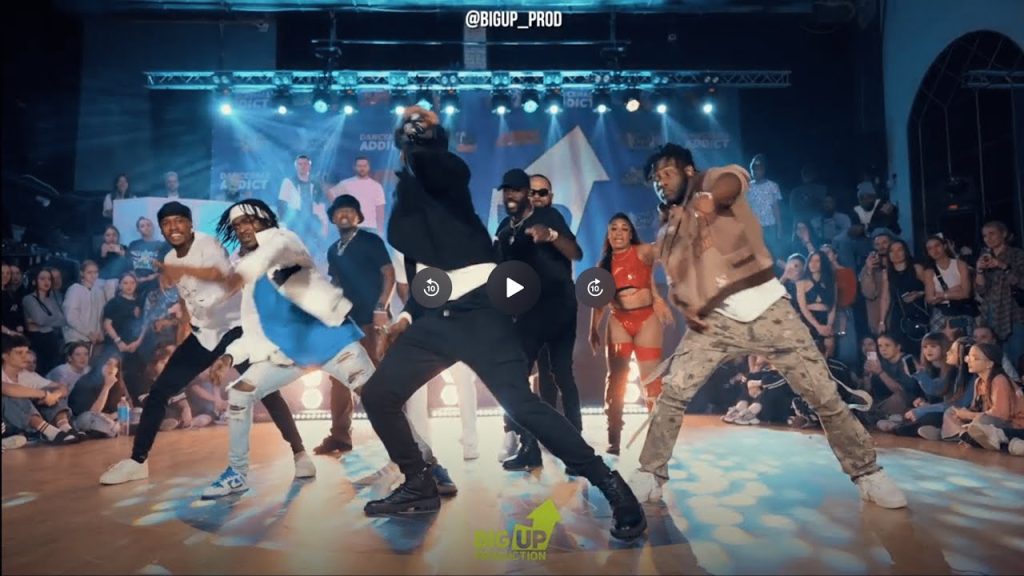
The Dancehall International Russia 2024 camp featured exceptional judge and teacher demonstrations, which were officially captured and shared by the event organizers, Big Up Production. Continue reading


The Dancehall International Russia 2024 camp featured exceptional judge and teacher demonstrations, which were officially captured and shared by the event organizers, Big Up Production. Continue reading
By Walter Rutledge

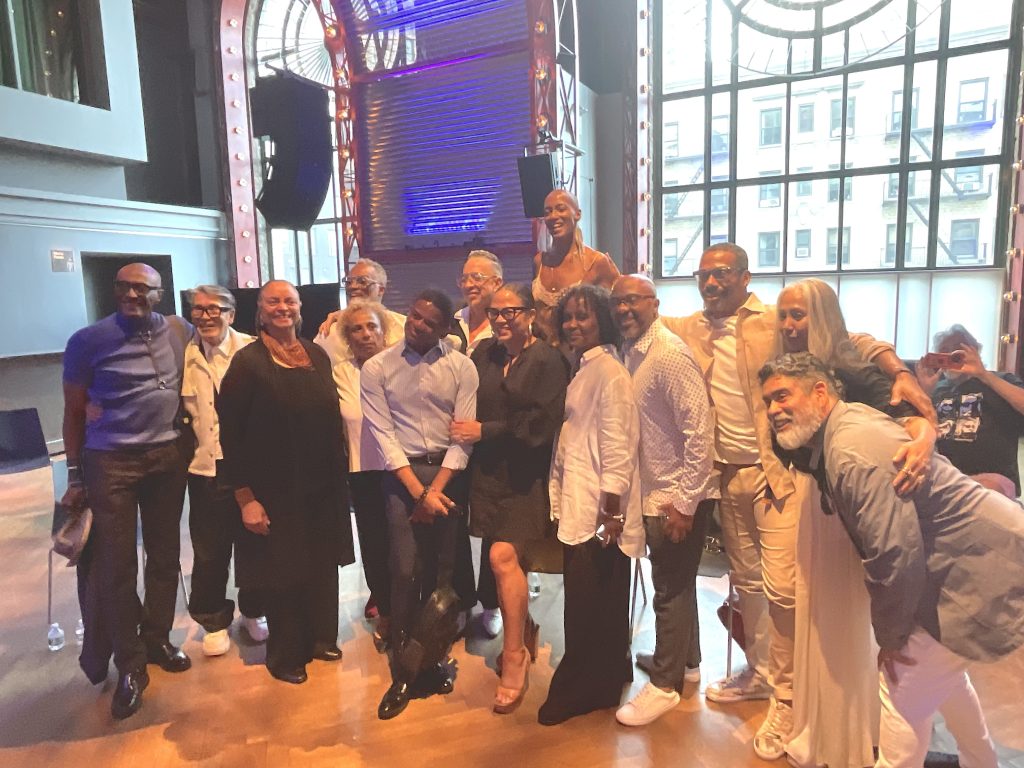
On June 4 at a group of former Ailey dancers sat down to discuss the recent reconstruction of Judith Jamison’s Hymn for the Ailey company’s four-day spring series at the Brooklyn Academy of Music. The dancers were part of the original cast of Hymn and had participated in the new remounting of the work, while also coaching the dancers in the present Ailey company. What was apparent from the beginning of the discussion was their willingness, enthusiasm and what can only be described the sheer joy in sharing their experiences with the dancers and now the public. Continue reading
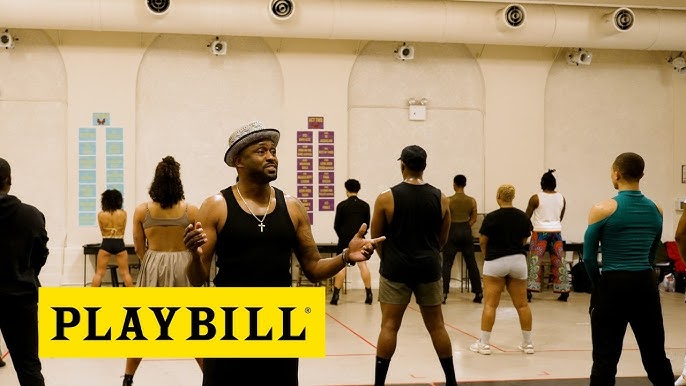
Life is a celebration with the first glimpse into rehearsals for New York City Center Encores! La Cage aux Folles. Playbill has a special look the show’s opening number We Are What We Are.The upcoming production will play at New York City Center June 17-28, with direction by Robert O’Hara and musical direction by Joseph Joubert, and choreography by Edgar Godineaux. Continue reading
By Walter Rutledge

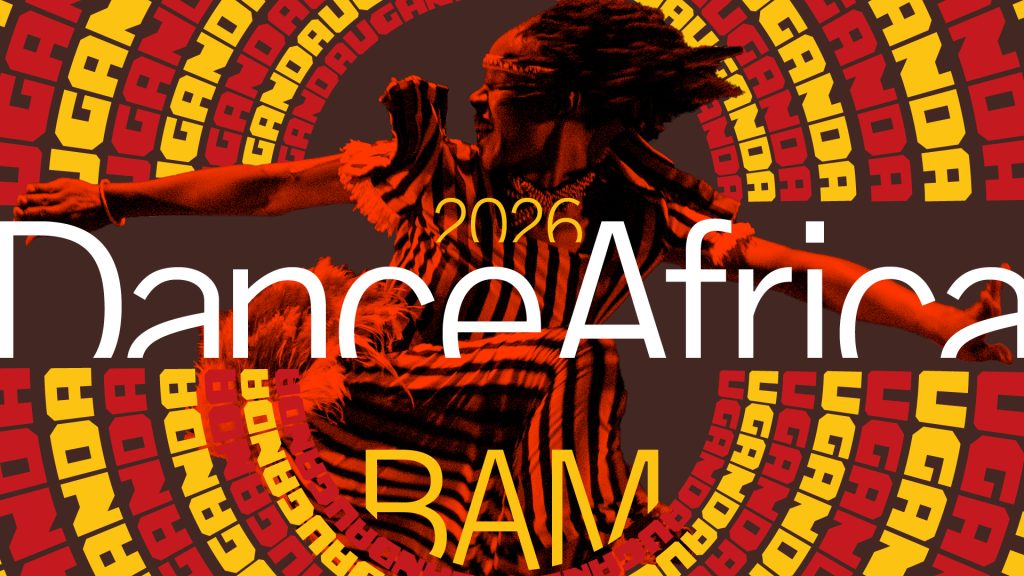
Memorial Day weekend, the Brooklyn Academy of Music, and an African market have all become synonymous with DanceAfrica; America’s largest celebration of African’s diasporic achievements in dance, music, art, theatre, fashion, craft, culture, and cuisine. The 2026 “Afrofest” faced challenges from Oya the Yoruba Orisha of storms, wind, and rain whose presence was felt the entire extended holiday weekend.
Even Oya’s inclemency could not dampen the enthusiasm and excitement for the annual dance concert, the centerpiece of the festival. This year’s theme was DanceAfrica 2026 Uganda: Umoja/Mirembe/Obulungi (Unity/Peace/Beauty)! The production was a stunning music and movement history lesson that continues to debunk the monolith myth.
When we refer to the monolith myth, we are referencing the misconception that the “country” of Africa exists in lockstep. To the contrary the African continent constitutes fifty-four sovereign nations with a multiplicity of languages, cultures, and customs. Over the festival’s forty-nine-year history DanceAfrica has strived to present the artistry from the entire African Diaspora including the Caribbean, South America and Bedford-Stuyvesant.
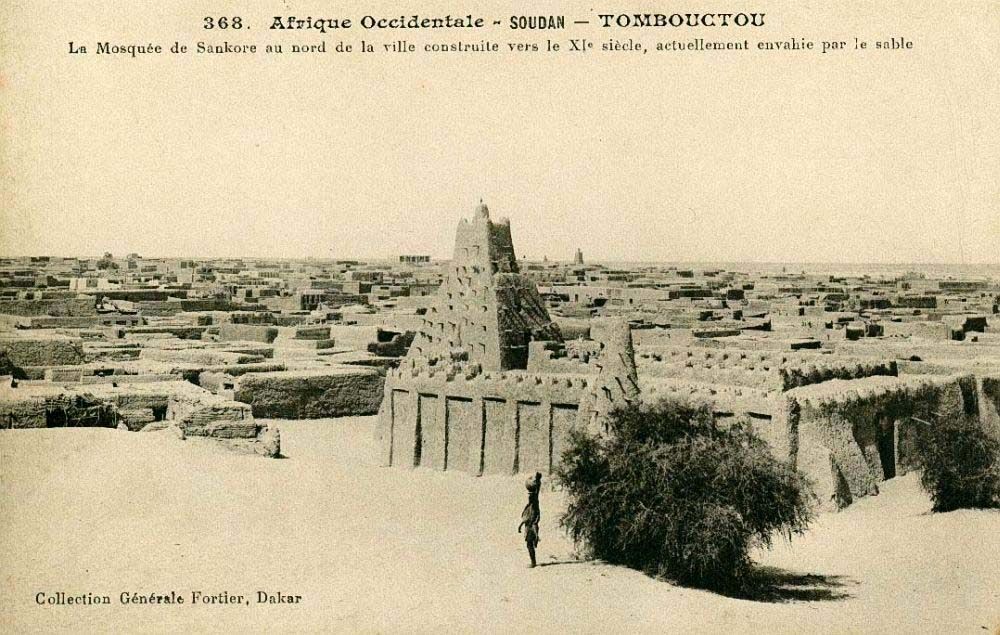
Long before the University of Bologna was established in 1088 AD Africa already had revered centers of learning. These included Morocco’s University of Al-Qarawiyyin (859 AD) and Egypt’s Al-Azhar University (970 AD). In the 14th-century Mali Empire ruler Mansa Musa established the fabled Sankoré Madrasa in Timbuktu, which rivaled Oxford and Cambridge. In many ways this four-day inner city immersive pedagogical experience embodies that spirit. Dance, music and visual arts workshops, seminars, community friendly events; and an abundance of outdoor food and craft vendors, and street performances (some spontaneous) all help create an entertaining, informative, and aspirational old world campus environment – a Brooklyn Sankoré Madrasa.
The crown jewel is the dance celebration under the direction of DanceAfrica Artistic Director Abdel Salaam, respectfully referred to as Baba Abdel. We are calling this event a celebration instead of performance because many of the elements were/are ceremonial steeped in ritual, which predates western presentational entertainment. Nana Kofi Osei Williams offered the Libation; the Ghanaian tradition of pouring libation is a profound spiritual ritual used to ask for blessings and protection. An act of reverence, humility and gratitude it honors God, our ancestral spirits, and natural forces around us.
The Prologue/Procession section began with a single drummer, Rasaan-Elijah “Talu” Green. The solo soon became a percussive quartet when joined by Nyemba Seales, Fara Camara and Jason McCaleb. Dr. Hanan Hameen-Diagne and four other members of the Memorial Candle Bearers move down the aisle to the space in front of the stage. Each dancer carried two candles and the joyous energy was an appropriate introduction for the procession of the Council of Elders.
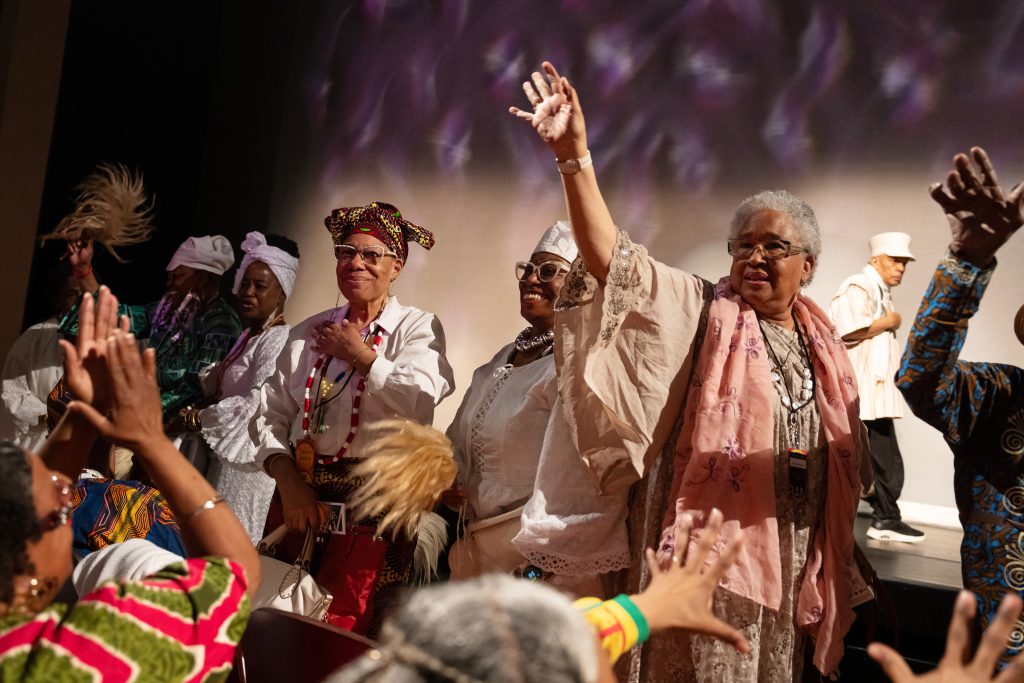
This group of twenty-eight elders hold the distinction of having been participants in the first DanceAfrica forty-nine years ago. Suddenly all three aisles in the orchestra are filled with the young dancers from The Billie’s Youth Arts Academy Dance Ensemble under the direction of Dr. Karen Thorton. Their participation brought this opening section to an energetic yet reverent conclusion.
The DanceAfrica Spirit Walkers, a division of Forces of Nature Dance Theatre, takes us on a new diasporic odyssey each year. In past years we had walked with AI generated elephants in grasslands of Mozambique or traveled down river to the Dja Faunal Reserve, a southeast Cameroon rainforest in Yaoundé and we partied at an Afrobeats club in Ghana. Each encounter reinforces the holistic connection between the earth, its inhabitants, the culture and the Gods.
The high level of production elements including lighting, costumes, sets, music, choreography and staging remain bar none. His 2026 offering was no exception. This year we ventured to Uganda to experience Mami Wata… Nalubaale: In honor of She.
We could paraphrase but, Baba Abdel best describes the production and deity as, “Mami Wata… Nalubaale: In Honor Of She (Mother Water… Mother Of The Ancestral Guardian Spirits) honors and pays profound respect to the Great Mother and her divine elemental manifestation of water in the oceans, lakes rivers, and seas that help protect and guard the spirit of life and our Ancestors. Mami Wata is ever present in numerous myths and legends of Africa and its Diaspora, the Caribbean Islands, South, and Central America. Nalubaale, in the Lugandan language of Uganda, is the ancient traditional name of the largest freshwater lake in Africa and the second largest lake in the world.”
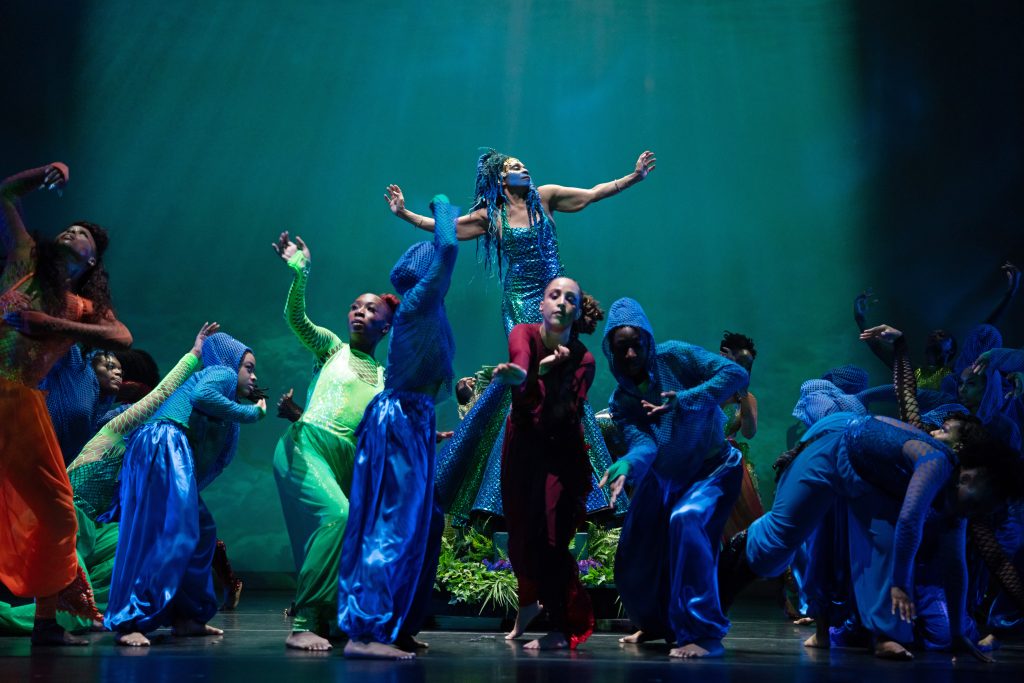
A single yellowish white orb upstage right appears as the sun above a billowing wave blue/green light. The illusion of being under water spilled over onto the orchestra, engulfing the audience in an atmospheric wave of magic. The dancers slow sustained upper body deportment produced an ethereal almost floating quality while a large corps of dancers consisting of member of Forces of Nature and the Billie Youth Arts Academy completed the expansive cast. The aquatic deity was eventually moved to center stage on a dais, which elevated her above the action. This gave the dramatically costumed and coiffed goddess an imposing omnipresent command.
In our O&A NYC Magazine 2025 DanceAfrica review (which we are sure you can all quote verbatim) we mentioned dispelling the monolith myth. This has become especially important in the present climate, when history is being rewritten to support a more sanitized narrative.
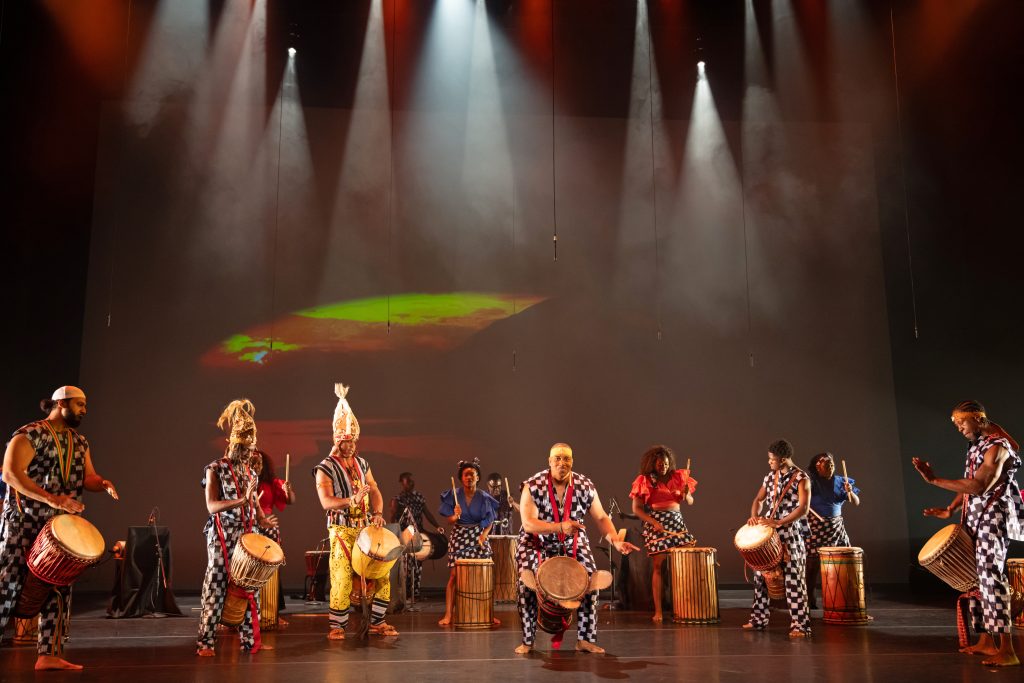
This year exemplified the majestic diversity of the African continent. The celebration presented Ugandan’s Ndere Troupe and Brooklyn’s own The Asase Yaa African American Dance Theater. Under the direction of Artistic Director Kofi Osei Williams (a first-generation Brooklynite of Ghanaian decent) his ensemble will soon celebrate their twenty-fifth anniversary of enriching the Brooklyn community with West African dance. This strong ensemble offered a program that included his company, youth from school and an impressive percussion ensemble lead by Williams. The section concluded with a rousing crescendo that incorporated the entire ensemble, musicians and students.
The Kampala based dance company, Ndere Troupe, prides itself on having over 40 authentic dances and countless songs in their repertoire. During DanceAfrica 49 they presented several works from different regions of the country. Throughout the presentation we marveled at the versatility of the men who danced, sang and played a myriad of instruments.
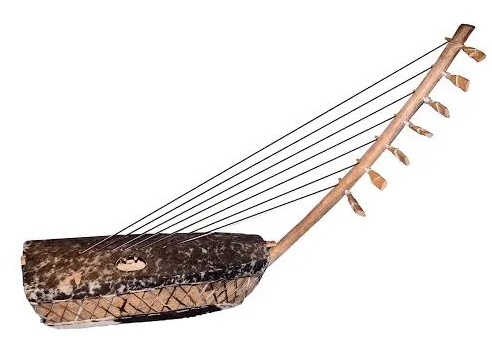
The instrumentation was one of the most notable differences between the West African Asase Yaa African American Dance Theater and East Africa’s Ndere Troupe. We were accustomed to the drum/percussion of West African dance; in contrast the sound of East Africa’s also incorporated the Embaire, A large wooden xylophone and string instruments including the Adungu. And the movement also had distinct differences.
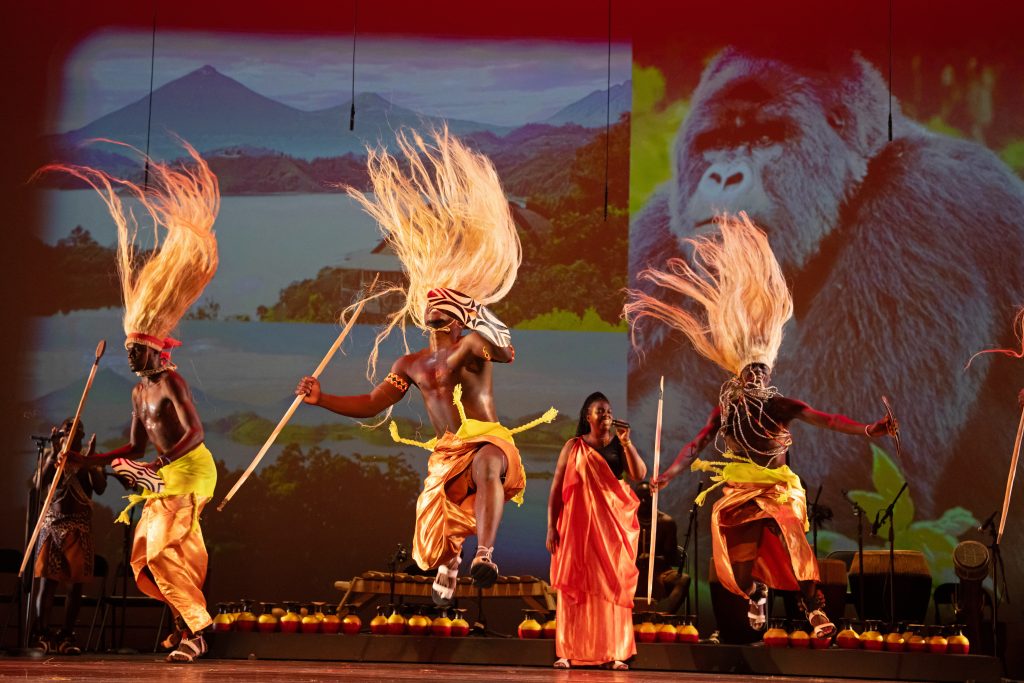
Two standout moments were the bakisimba and the kizino dance. The kizino, from the Southwestern region of Uganda, was an athletic dance performed by the men that consisting of sustained jumping – the original “hang time”. The bakisimba, which was performed by the women, originated from the Buganda Kingdom in Central Uganda. The deliberately calm use of the head, arms and torso in juxtaposition to the continuously circular moving hips is one of the truest examples of the use of polyrhythms. Members of the The Billie’s Youth Arts Academy Dance Ensemble were given the opportunity to learn and perform the bakisimba with the Uganda ensemble creating another Brooklyn Sankore moment.
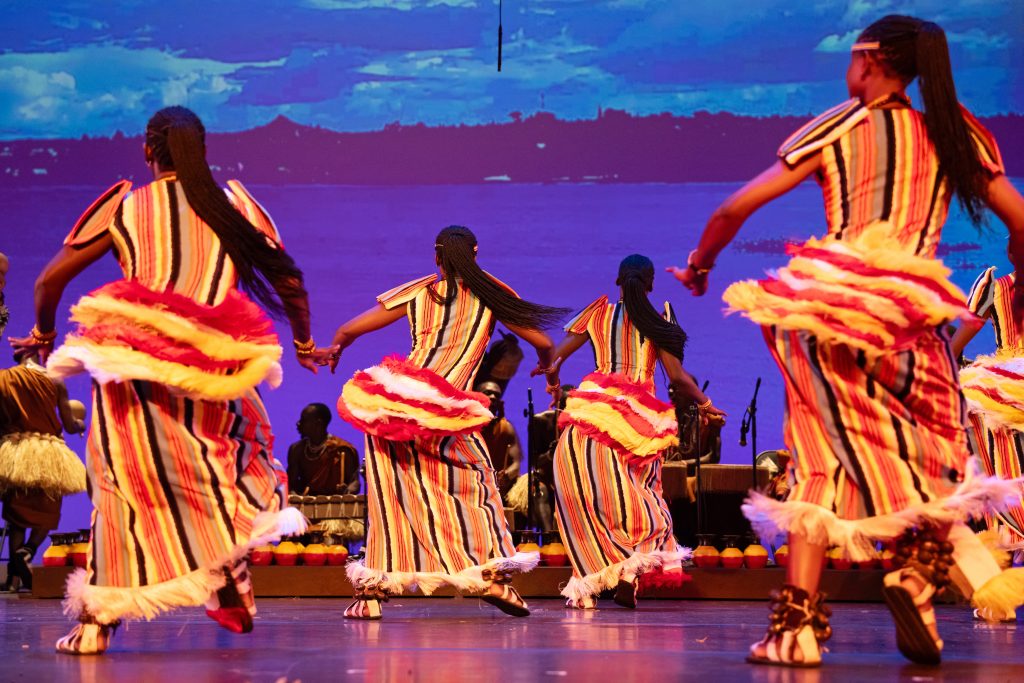
Through DanceAfrica, Kwanza at the Apollo and Forces of Nature Dance Company Abdel Salaam has enriched the community for over four decades. The focus has always gone beyond merely dancing, its dance as communication, dance as education, and dance as affirmation. Salaam’s gifts have been applauded and acknowledged, but in our opinion, he remains an under recognized artist.
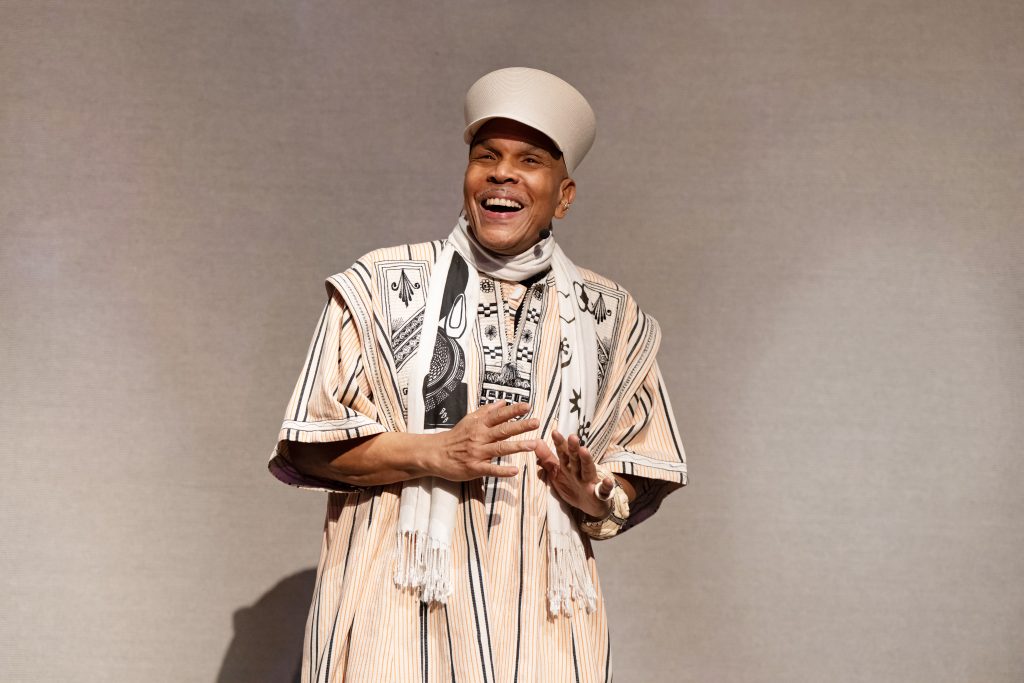
His production elements, strong choreography, imaginative concepts and uncluttered direction rival the best concert dance and theatrical productions. We must ask ourselves why isn’t his work being presented by more companies and outside organizations? Clearly their loss. Fortunate for us we can capture his magic in these productions, but we would all benefit from more Abdel Salaam.
DanceAfrica reminds us of the Lerner and Loewe musical Brigadoon. In the musical a magical village appears one day every hundred years creating an idyllic community. At DanceAfrica a magical African village appears for four days every May transforming BAM and the surrounding streets into Brooklyn’s Sankoré Madrasa.
In Photo: 1. Postcard of Sankoré Madrasa with the mosque in Timbuktu (1905–06), 2. Council of Elders, 3. Dyane Harvey Salaam and cast, 4.Asase Yaa African American Dance Theater, 5. the Adungu -string instrument, 6. kizino dance, 7.bakisimba dance, 8. Abdel Salaam
Photographer: 1. published by Edmond Fortier 2,3,4,6,7, 8 Julieta Cervantes

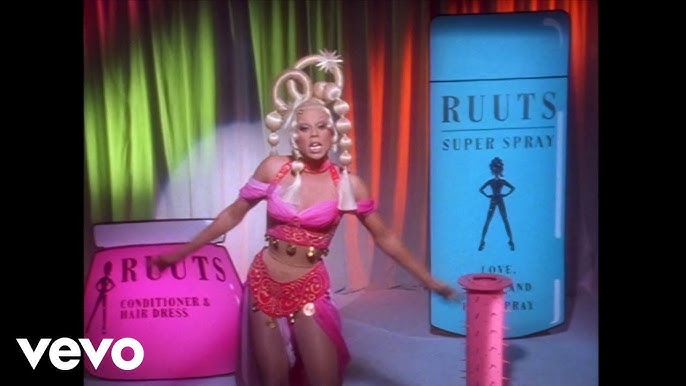
Back to My Roots is a vibrant house and dance-pop track by entertainer RuPaul, released on April 27, 1993, as the fourth single from the debut album Supermodel of the World. The song functions as a bold celebration of Black beauty, traditional hairstyles, and self-expression, heavily utilizing the famous phrase “Black hair is a revolution”. Continue reading
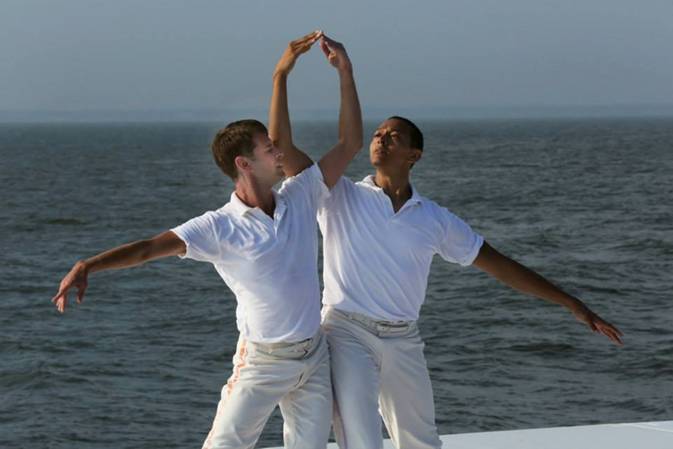
Duet from Concerto Six Twenty-Two is set to Concerto in A for Clarinet and Orchestra, K. 622 by Wolfgang Amadeus Mozart. Choreographer Lar Lubovitch premiered this work on his company, the Lar Lubovitch Dance Company, at the Municipal Theatre in Angers, France on December 12th 1985 on dancers Sylvain Lafortune and Edward Hillyer. The work was performed at the first Fire Island Dance Festival, which has become the annual summer fundraising centerpiece for Dancers Responding To AIDS. Continue reading
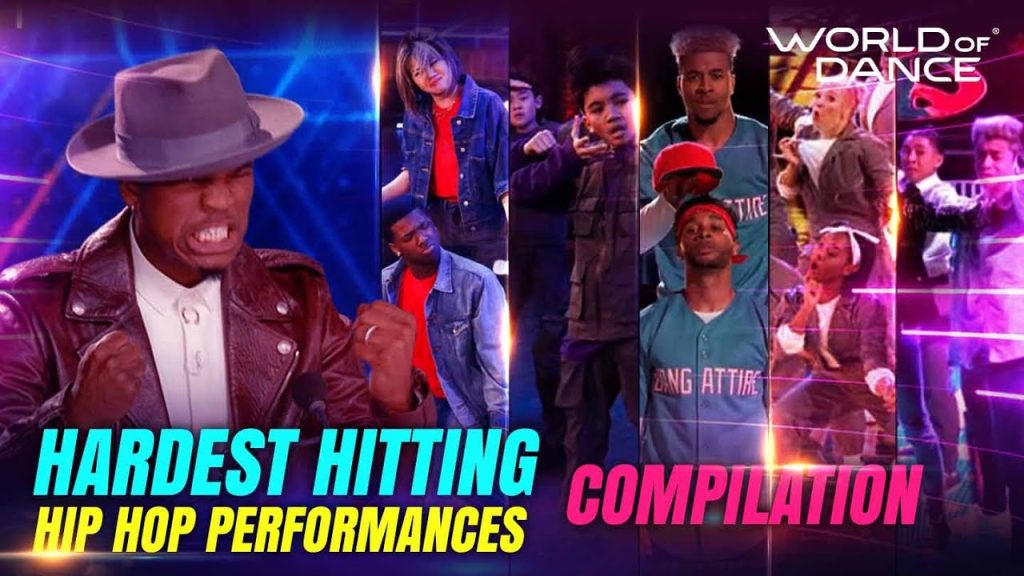
The official World Of Dance compilation Hardest Hitting Hip Hop Performances on WOD features a curated selection of explosive, high-energy routines defined by sharp isolations, intense musicality, and crowd moving choreography. Continue reading

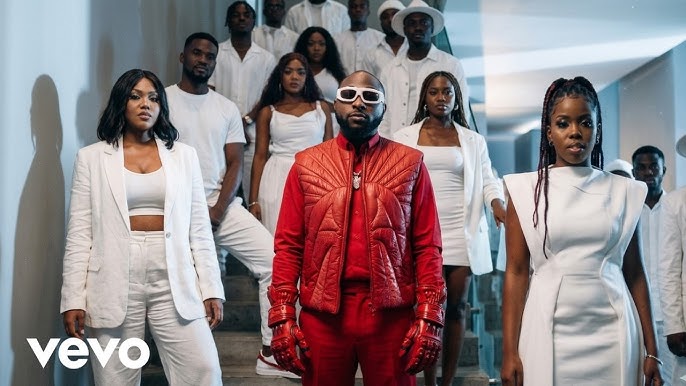
Nigerian Afrobeats Superstar Davido has dynamic ties to Amapiano, frequently collaborating with South African artists and infusing his music with the genre’s signature log drum baselines. While he doesn’t have a single solo song titled “Amapiano,” his catalog is rich with cross-continental Amapiano hits and remixes.
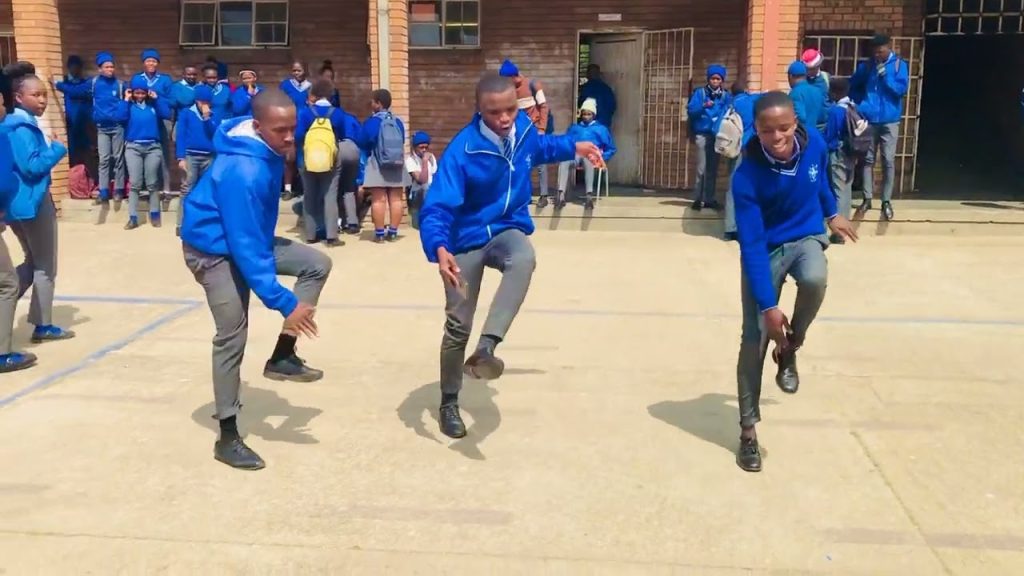
Dressed in their official school uniforms, these talented young students frequently take over classrooms, school yards, and assemblies to showcase incredibly synchronized, high-energy footwork.Videos of South African school kids doing the most while performing Amapiano Dance. Continue reading

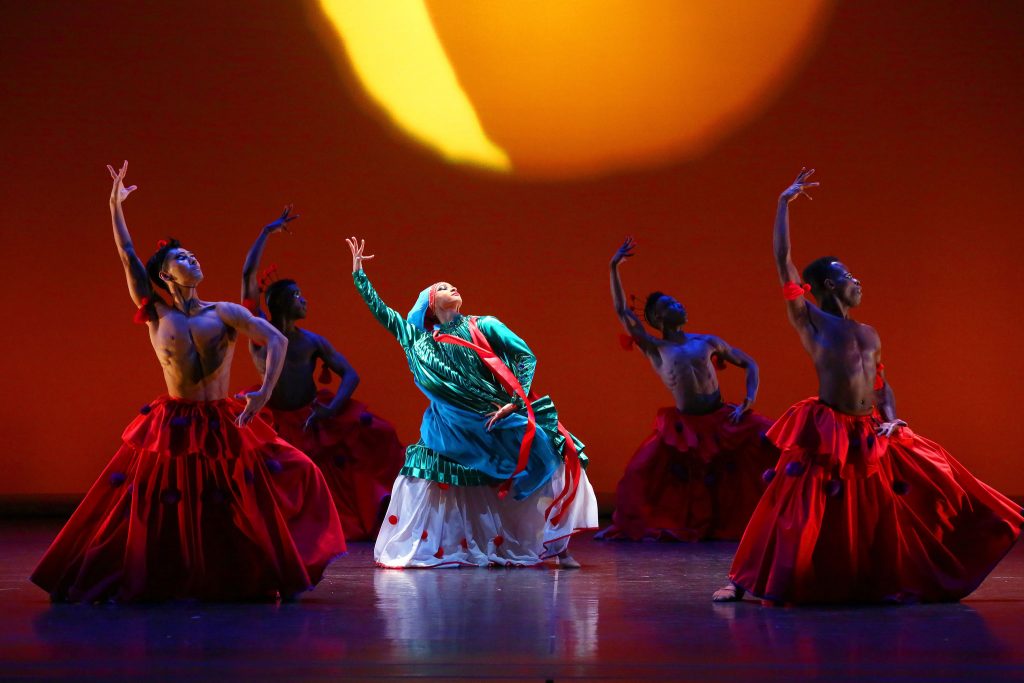
The 2018 return of Geoffrey Holder’s masterwork Dougla to the repertoire Dance Theatre of Harlem (DTH) was a resounding success. The work is a sensorially sumptuous movement fest; and it is no wonder Dougla has remained an audience favorite since its premiere on April 16, 1974.
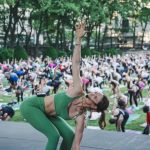 Everyone’s favorite yoga program returns for summer 2026! From May 27 through September 16, join us for classes Tuesday mornings on the Upper Terrace, and Wednesday evenings on the lawn.
Bryant Park Yoga presented by Halara is free to the public. Bring your mat and water and enjoy one hour of yoga with New York City’s top instructors.
Bryant Park
Everyone’s favorite yoga program returns for summer 2026! From May 27 through September 16, join us for classes Tuesday mornings on the Upper Terrace, and Wednesday evenings on the lawn.
Bryant Park Yoga presented by Halara is free to the public. Bring your mat and water and enjoy one hour of yoga with New York City’s top instructors.
Bryant Park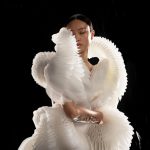 A pioneer in the use of new technologies, Van Herpen transcends conventional clothing norms while embracing both traditional couture artisanship and innovative techniques. Ranging from the micro to the macro, the exhibition explores the body’s place in space, its relationship to clothing and its environment, and its future in a rapidly changing world.
Brooklyn Musiem of Art
A pioneer in the use of new technologies, Van Herpen transcends conventional clothing norms while embracing both traditional couture artisanship and innovative techniques. Ranging from the micro to the macro, the exhibition explores the body’s place in space, its relationship to clothing and its environment, and its future in a rapidly changing world.
Brooklyn Musiem of Art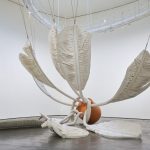 The show will present iconic works from the museum’s collection by more than 20 artists, including John Chamberlain, Chryssa, Jim Dine, Roy Lichtenstein, Lucas Samaras, and Andy Warhol. Highlights will include Maurizio Cattelan’s Comedian (2019) and Claes Oldenburg and Coosje van Bruggen’s Soft Shuttlecock (1995), on view in New York for the first time in 25 years. These works will be shown alongside Yayoi Kusama’s INFINITY MIRRORED ROOM – DANCING LIGHTS THAT FLEW UP TO THE UNIVERSE (2019), a major loan to the exhibition, and recent acquisitions by contemporary artists such as Farah Al Qasimi, Alex Da Corte, Lucia Hierro, Martine Gutierrez, Lauren Halsey, Mohammed Ahmed Ibrahim, Yee I-Lann, Cara Romero, and Liu Shiyuan, whose practices expand the legacies of Pop.
1071 Fifth Avenue New York, NY 10128 (at 88th Street)
The show will present iconic works from the museum’s collection by more than 20 artists, including John Chamberlain, Chryssa, Jim Dine, Roy Lichtenstein, Lucas Samaras, and Andy Warhol. Highlights will include Maurizio Cattelan’s Comedian (2019) and Claes Oldenburg and Coosje van Bruggen’s Soft Shuttlecock (1995), on view in New York for the first time in 25 years. These works will be shown alongside Yayoi Kusama’s INFINITY MIRRORED ROOM – DANCING LIGHTS THAT FLEW UP TO THE UNIVERSE (2019), a major loan to the exhibition, and recent acquisitions by contemporary artists such as Farah Al Qasimi, Alex Da Corte, Lucia Hierro, Martine Gutierrez, Lauren Halsey, Mohammed Ahmed Ibrahim, Yee I-Lann, Cara Romero, and Liu Shiyuan, whose practices expand the legacies of Pop.
1071 Fifth Avenue New York, NY 10128 (at 88th Street)

The new permanent installation foregrounds the creativity of artists across the subcontinent and enduring, dynamic historical traditions. The Met’s Arts of Africa galleries returned in May 2025, in a reimagined Michael C. Rockefeller Wing. Following a multiyear renovation, the reenvisioned installation reintroduces visitors to the Museum’s collection of sub-Saharan African art through a selection of some 500 works organized to survey major artistic movements and living traditions from across the subcontinent. The new galleries present original creations from the Middle Ages to the present, and one-fourth of the works are on display at the Museum for the first time.
The Met Fifth AvenueA pioneer in the use of new technologies, Van Herpen transcends conventional clothing norms while embracing both traditional couture artisanship and innovative techniques. Ranging from the micro to the macro, the exhibition explores the body’s place in space, its relationship to clothing and its environment, and its future in a rapidly changing world.
Brooklyn Musiem of ArtThe show will present iconic works from the museum’s collection by more than 20 artists, including John Chamberlain, Chryssa, Jim Dine, Roy Lichtenstein, Lucas Samaras, and Andy Warhol. Highlights will include Maurizio Cattelan’s Comedian (2019) and Claes Oldenburg and Coosje van Bruggen’s Soft Shuttlecock (1995), on view in New York for the first time in 25 years. These works will be shown alongside Yayoi Kusama’s INFINITY MIRRORED ROOM – DANCING LIGHTS THAT FLEW UP TO THE UNIVERSE (2019), a major loan to the exhibition, and recent acquisitions by contemporary artists such as Farah Al Qasimi, Alex Da Corte, Lucia Hierro, Martine Gutierrez, Lauren Halsey, Mohammed Ahmed Ibrahim, Yee I-Lann, Cara Romero, and Liu Shiyuan, whose practices expand the legacies of Pop.
1071 Fifth Avenue New York, NY 10128 (at 88th Street)
The new permanent installation foregrounds the creativity of artists across the subcontinent and enduring, dynamic historical traditions. The Met’s Arts of Africa galleries returned in May 2025, in a reimagined Michael C. Rockefeller Wing. Following a multiyear renovation, the reenvisioned installation reintroduces visitors to the Museum’s collection of sub-Saharan African art through a selection of some 500 works organized to survey major artistic movements and living traditions from across the subcontinent. The new galleries present original creations from the Middle Ages to the present, and one-fourth of the works are on display at the Museum for the first time.
The Met Fifth Avenue Bryant Park Yoga Everyone’s favorite yoga program returns for summer 2026! From May 27 through September 16, join us for classes Tuesday mornings on the Upper Terrace, and Wednesday evenings on the lawn.
Bryant Park Yoga presented by Halara is free to the public. Bring your mat and water and enjoy one hour of yoga with New York City’s top instructors.
Bryant Park
Bryant Park Yoga Everyone’s favorite yoga program returns for summer 2026! From May 27 through September 16, join us for classes Tuesday mornings on the Upper Terrace, and Wednesday evenings on the lawn.
Bryant Park Yoga presented by Halara is free to the public. Bring your mat and water and enjoy one hour of yoga with New York City’s top instructors.
Bryant Park
 A dance and wellness classes design for Older Adults taught by Walter Rutledge
204 W 134th St, New York, NY 10030
A pioneer in the use of new technologies, Van Herpen transcends conventional clothing norms while embracing both traditional couture artisanship and innovative techniques. Ranging from the micro to the macro, the exhibition explores the body’s place in space, its relationship to clothing and its environment, and its future in a rapidly changing world.
Brooklyn Musiem of ArtThe show will present iconic works from the museum’s collection by more than 20 artists, including John Chamberlain, Chryssa, Jim Dine, Roy Lichtenstein, Lucas Samaras, and Andy Warhol. Highlights will include Maurizio Cattelan’s Comedian (2019) and Claes Oldenburg and Coosje van Bruggen’s Soft Shuttlecock (1995), on view in New York for the first time in 25 years. These works will be shown alongside Yayoi Kusama’s INFINITY MIRRORED ROOM – DANCING LIGHTS THAT FLEW UP TO THE UNIVERSE (2019), a major loan to the exhibition, and recent acquisitions by contemporary artists such as Farah Al Qasimi, Alex Da Corte, Lucia Hierro, Martine Gutierrez, Lauren Halsey, Mohammed Ahmed Ibrahim, Yee I-Lann, Cara Romero, and Liu Shiyuan, whose practices expand the legacies of Pop.
1071 Fifth Avenue New York, NY 10128 (at 88th Street)
A dance and wellness classes design for Older Adults taught by Walter Rutledge
204 W 134th St, New York, NY 10030
A pioneer in the use of new technologies, Van Herpen transcends conventional clothing norms while embracing both traditional couture artisanship and innovative techniques. Ranging from the micro to the macro, the exhibition explores the body’s place in space, its relationship to clothing and its environment, and its future in a rapidly changing world.
Brooklyn Musiem of ArtThe show will present iconic works from the museum’s collection by more than 20 artists, including John Chamberlain, Chryssa, Jim Dine, Roy Lichtenstein, Lucas Samaras, and Andy Warhol. Highlights will include Maurizio Cattelan’s Comedian (2019) and Claes Oldenburg and Coosje van Bruggen’s Soft Shuttlecock (1995), on view in New York for the first time in 25 years. These works will be shown alongside Yayoi Kusama’s INFINITY MIRRORED ROOM – DANCING LIGHTS THAT FLEW UP TO THE UNIVERSE (2019), a major loan to the exhibition, and recent acquisitions by contemporary artists such as Farah Al Qasimi, Alex Da Corte, Lucia Hierro, Martine Gutierrez, Lauren Halsey, Mohammed Ahmed Ibrahim, Yee I-Lann, Cara Romero, and Liu Shiyuan, whose practices expand the legacies of Pop.
1071 Fifth Avenue New York, NY 10128 (at 88th Street)
The new permanent installation foregrounds the creativity of artists across the subcontinent and enduring, dynamic historical traditions. The Met’s Arts of Africa galleries returned in May 2025, in a reimagined Michael C. Rockefeller Wing. Following a multiyear renovation, the reenvisioned installation reintroduces visitors to the Museum’s collection of sub-Saharan African art through a selection of some 500 works organized to survey major artistic movements and living traditions from across the subcontinent. The new galleries present original creations from the Middle Ages to the present, and one-fourth of the works are on display at the Museum for the first time.
The Met Fifth AvenueA pioneer in the use of new technologies, Van Herpen transcends conventional clothing norms while embracing both traditional couture artisanship and innovative techniques. Ranging from the micro to the macro, the exhibition explores the body’s place in space, its relationship to clothing and its environment, and its future in a rapidly changing world.
Brooklyn Musiem of ArtThe show will present iconic works from the museum’s collection by more than 20 artists, including John Chamberlain, Chryssa, Jim Dine, Roy Lichtenstein, Lucas Samaras, and Andy Warhol. Highlights will include Maurizio Cattelan’s Comedian (2019) and Claes Oldenburg and Coosje van Bruggen’s Soft Shuttlecock (1995), on view in New York for the first time in 25 years. These works will be shown alongside Yayoi Kusama’s INFINITY MIRRORED ROOM – DANCING LIGHTS THAT FLEW UP TO THE UNIVERSE (2019), a major loan to the exhibition, and recent acquisitions by contemporary artists such as Farah Al Qasimi, Alex Da Corte, Lucia Hierro, Martine Gutierrez, Lauren Halsey, Mohammed Ahmed Ibrahim, Yee I-Lann, Cara Romero, and Liu Shiyuan, whose practices expand the legacies of Pop.
1071 Fifth Avenue New York, NY 10128 (at 88th Street)
The new permanent installation foregrounds the creativity of artists across the subcontinent and enduring, dynamic historical traditions. The Met’s Arts of Africa galleries returned in May 2025, in a reimagined Michael C. Rockefeller Wing. Following a multiyear renovation, the reenvisioned installation reintroduces visitors to the Museum’s collection of sub-Saharan African art through a selection of some 500 works organized to survey major artistic movements and living traditions from across the subcontinent. The new galleries present original creations from the Middle Ages to the present, and one-fourth of the works are on display at the Museum for the first time.
The Met Fifth AvenueA dance and wellness classes design for Older Adults taught by Walter Rutledge
720 Nereid Ave, Bronx, NY 10466
A pioneer in the use of new technologies, Van Herpen transcends conventional clothing norms while embracing both traditional couture artisanship and innovative techniques. Ranging from the micro to the macro, the exhibition explores the body’s place in space, its relationship to clothing and its environment, and its future in a rapidly changing world.
Brooklyn Musiem of ArtThe show will present iconic works from the museum’s collection by more than 20 artists, including John Chamberlain, Chryssa, Jim Dine, Roy Lichtenstein, Lucas Samaras, and Andy Warhol. Highlights will include Maurizio Cattelan’s Comedian (2019) and Claes Oldenburg and Coosje van Bruggen’s Soft Shuttlecock (1995), on view in New York for the first time in 25 years. These works will be shown alongside Yayoi Kusama’s INFINITY MIRRORED ROOM – DANCING LIGHTS THAT FLEW UP TO THE UNIVERSE (2019), a major loan to the exhibition, and recent acquisitions by contemporary artists such as Farah Al Qasimi, Alex Da Corte, Lucia Hierro, Martine Gutierrez, Lauren Halsey, Mohammed Ahmed Ibrahim, Yee I-Lann, Cara Romero, and Liu Shiyuan, whose practices expand the legacies of Pop.
1071 Fifth Avenue New York, NY 10128 (at 88th Street)
The new permanent installation foregrounds the creativity of artists across the subcontinent and enduring, dynamic historical traditions. The Met’s Arts of Africa galleries returned in May 2025, in a reimagined Michael C. Rockefeller Wing. Following a multiyear renovation, the reenvisioned installation reintroduces visitors to the Museum’s collection of sub-Saharan African art through a selection of some 500 works organized to survey major artistic movements and living traditions from across the subcontinent. The new galleries present original creations from the Middle Ages to the present, and one-fourth of the works are on display at the Museum for the first time.
The Met Fifth AvenueA pioneer in the use of new technologies, Van Herpen transcends conventional clothing norms while embracing both traditional couture artisanship and innovative techniques. Ranging from the micro to the macro, the exhibition explores the body’s place in space, its relationship to clothing and its environment, and its future in a rapidly changing world.
Brooklyn Musiem of ArtThe show will present iconic works from the museum’s collection by more than 20 artists, including John Chamberlain, Chryssa, Jim Dine, Roy Lichtenstein, Lucas Samaras, and Andy Warhol. Highlights will include Maurizio Cattelan’s Comedian (2019) and Claes Oldenburg and Coosje van Bruggen’s Soft Shuttlecock (1995), on view in New York for the first time in 25 years. These works will be shown alongside Yayoi Kusama’s INFINITY MIRRORED ROOM – DANCING LIGHTS THAT FLEW UP TO THE UNIVERSE (2019), a major loan to the exhibition, and recent acquisitions by contemporary artists such as Farah Al Qasimi, Alex Da Corte, Lucia Hierro, Martine Gutierrez, Lauren Halsey, Mohammed Ahmed Ibrahim, Yee I-Lann, Cara Romero, and Liu Shiyuan, whose practices expand the legacies of Pop.
1071 Fifth Avenue New York, NY 10128 (at 88th Street)
The new permanent installation foregrounds the creativity of artists across the subcontinent and enduring, dynamic historical traditions. The Met’s Arts of Africa galleries returned in May 2025, in a reimagined Michael C. Rockefeller Wing. Following a multiyear renovation, the reenvisioned installation reintroduces visitors to the Museum’s collection of sub-Saharan African art through a selection of some 500 works organized to survey major artistic movements and living traditions from across the subcontinent. The new galleries present original creations from the Middle Ages to the present, and one-fourth of the works are on display at the Museum for the first time.
The Met Fifth Avenue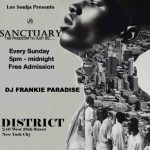 New York hottest place to be for a fun Sunday evening house music party. JD Frankie Paradise will get you moving whether you dip, twist or just strike a pose.
District - 246 west 35th street
A pioneer in the use of new technologies, Van Herpen transcends conventional clothing norms while embracing both traditional couture artisanship and innovative techniques. Ranging from the micro to the macro, the exhibition explores the body’s place in space, its relationship to clothing and its environment, and its future in a rapidly changing world.
Brooklyn Musiem of ArtThe show will present iconic works from the museum’s collection by more than 20 artists, including John Chamberlain, Chryssa, Jim Dine, Roy Lichtenstein, Lucas Samaras, and Andy Warhol. Highlights will include Maurizio Cattelan’s Comedian (2019) and Claes Oldenburg and Coosje van Bruggen’s Soft Shuttlecock (1995), on view in New York for the first time in 25 years. These works will be shown alongside Yayoi Kusama’s INFINITY MIRRORED ROOM – DANCING LIGHTS THAT FLEW UP TO THE UNIVERSE (2019), a major loan to the exhibition, and recent acquisitions by contemporary artists such as Farah Al Qasimi, Alex Da Corte, Lucia Hierro, Martine Gutierrez, Lauren Halsey, Mohammed Ahmed Ibrahim, Yee I-Lann, Cara Romero, and Liu Shiyuan, whose practices expand the legacies of Pop.
1071 Fifth Avenue New York, NY 10128 (at 88th Street)
New York hottest place to be for a fun Sunday evening house music party. JD Frankie Paradise will get you moving whether you dip, twist or just strike a pose.
District - 246 west 35th street
A pioneer in the use of new technologies, Van Herpen transcends conventional clothing norms while embracing both traditional couture artisanship and innovative techniques. Ranging from the micro to the macro, the exhibition explores the body’s place in space, its relationship to clothing and its environment, and its future in a rapidly changing world.
Brooklyn Musiem of ArtThe show will present iconic works from the museum’s collection by more than 20 artists, including John Chamberlain, Chryssa, Jim Dine, Roy Lichtenstein, Lucas Samaras, and Andy Warhol. Highlights will include Maurizio Cattelan’s Comedian (2019) and Claes Oldenburg and Coosje van Bruggen’s Soft Shuttlecock (1995), on view in New York for the first time in 25 years. These works will be shown alongside Yayoi Kusama’s INFINITY MIRRORED ROOM – DANCING LIGHTS THAT FLEW UP TO THE UNIVERSE (2019), a major loan to the exhibition, and recent acquisitions by contemporary artists such as Farah Al Qasimi, Alex Da Corte, Lucia Hierro, Martine Gutierrez, Lauren Halsey, Mohammed Ahmed Ibrahim, Yee I-Lann, Cara Romero, and Liu Shiyuan, whose practices expand the legacies of Pop.
1071 Fifth Avenue New York, NY 10128 (at 88th Street)
The new permanent installation foregrounds the creativity of artists across the subcontinent and enduring, dynamic historical traditions. The Met’s Arts of Africa galleries returned in May 2025, in a reimagined Michael C. Rockefeller Wing. Following a multiyear renovation, the reenvisioned installation reintroduces visitors to the Museum’s collection of sub-Saharan African art through a selection of some 500 works organized to survey major artistic movements and living traditions from across the subcontinent. The new galleries present original creations from the Middle Ages to the present, and one-fourth of the works are on display at the Museum for the first time.
The Met Fifth Avenue Welcome to the 33rd season of summer movies in Bryant Park! Bring a blanket and a friend, and grab your spot on the lawn to watch a feature film on the big screen under the stars. The lawn opens at 5pm and films begin at 8pm.
 Bryant Park
Everyone’s favorite yoga program returns for summer 2026! From May 27 through September 16, join us for classes Tuesday mornings on the Upper Terrace, and Wednesday evenings on the lawn.
Bryant Park Yoga presented by Halara is free to the public. Bring your mat and water and enjoy one hour of yoga with New York City’s top instructors.
Bryant ParkA pioneer in the use of new technologies, Van Herpen transcends conventional clothing norms while embracing both traditional couture artisanship and innovative techniques. Ranging from the micro to the macro, the exhibition explores the body’s place in space, its relationship to clothing and its environment, and its future in a rapidly changing world.
Brooklyn Musiem of ArtThe show will present iconic works from the museum’s collection by more than 20 artists, including John Chamberlain, Chryssa, Jim Dine, Roy Lichtenstein, Lucas Samaras, and Andy Warhol. Highlights will include Maurizio Cattelan’s Comedian (2019) and Claes Oldenburg and Coosje van Bruggen’s Soft Shuttlecock (1995), on view in New York for the first time in 25 years. These works will be shown alongside Yayoi Kusama’s INFINITY MIRRORED ROOM – DANCING LIGHTS THAT FLEW UP TO THE UNIVERSE (2019), a major loan to the exhibition, and recent acquisitions by contemporary artists such as Farah Al Qasimi, Alex Da Corte, Lucia Hierro, Martine Gutierrez, Lauren Halsey, Mohammed Ahmed Ibrahim, Yee I-Lann, Cara Romero, and Liu Shiyuan, whose practices expand the legacies of Pop.
1071 Fifth Avenue New York, NY 10128 (at 88th Street)
Bryant Park
Everyone’s favorite yoga program returns for summer 2026! From May 27 through September 16, join us for classes Tuesday mornings on the Upper Terrace, and Wednesday evenings on the lawn.
Bryant Park Yoga presented by Halara is free to the public. Bring your mat and water and enjoy one hour of yoga with New York City’s top instructors.
Bryant ParkA pioneer in the use of new technologies, Van Herpen transcends conventional clothing norms while embracing both traditional couture artisanship and innovative techniques. Ranging from the micro to the macro, the exhibition explores the body’s place in space, its relationship to clothing and its environment, and its future in a rapidly changing world.
Brooklyn Musiem of ArtThe show will present iconic works from the museum’s collection by more than 20 artists, including John Chamberlain, Chryssa, Jim Dine, Roy Lichtenstein, Lucas Samaras, and Andy Warhol. Highlights will include Maurizio Cattelan’s Comedian (2019) and Claes Oldenburg and Coosje van Bruggen’s Soft Shuttlecock (1995), on view in New York for the first time in 25 years. These works will be shown alongside Yayoi Kusama’s INFINITY MIRRORED ROOM – DANCING LIGHTS THAT FLEW UP TO THE UNIVERSE (2019), a major loan to the exhibition, and recent acquisitions by contemporary artists such as Farah Al Qasimi, Alex Da Corte, Lucia Hierro, Martine Gutierrez, Lauren Halsey, Mohammed Ahmed Ibrahim, Yee I-Lann, Cara Romero, and Liu Shiyuan, whose practices expand the legacies of Pop.
1071 Fifth Avenue New York, NY 10128 (at 88th Street)
The new permanent installation foregrounds the creativity of artists across the subcontinent and enduring, dynamic historical traditions. The Met’s Arts of Africa galleries returned in May 2025, in a reimagined Michael C. Rockefeller Wing. Following a multiyear renovation, the reenvisioned installation reintroduces visitors to the Museum’s collection of sub-Saharan African art through a selection of some 500 works organized to survey major artistic movements and living traditions from across the subcontinent. The new galleries present original creations from the Middle Ages to the present, and one-fourth of the works are on display at the Museum for the first time.
The Met Fifth Avenue