
9/15/26 O&A NYC DANCE BY WALTER RUTLEDGE: The Thelma Hill Performing Arts Center Begins 50th Anniversary Season

By Walter Rutledge

The Thelma Hill Performing Arts Center (THPAC) will begin the organization’s fiftieth anniversary season September 16, 2026, at the Mark O’Donnell Theater, 160 Schermerhorn Street in Downtown Brooklyn. The five-performance series, which run through Sunday September 20, will offer works by dance masters, emerging choreographers and neophyte dance makers. The celebration will feature artists from its 50-year legacy including dance rebel Elio Pomare (courtesy of Alpha Omega Dance Company) and Emerge 125 who will be making their THPAC debut.
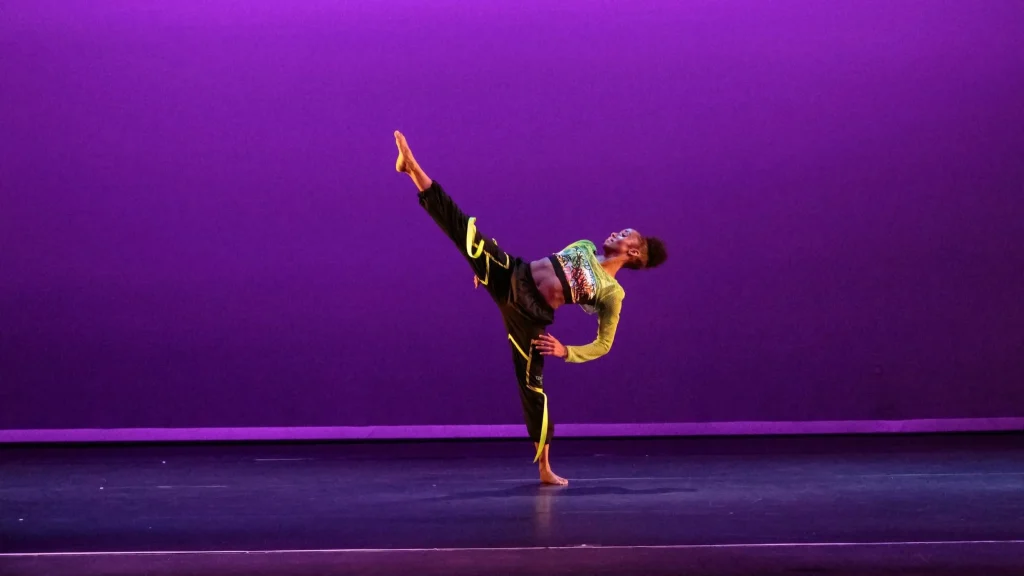
The undisputed Granddaddy of presenting organizations for Black and Brown artists THPAC continues the search for the new and cutting edge; while preserving Black dance’s ephemeral past. “Time has a way of reducing exciting ballets, captivating performer, and prolific choreographers to mere dance history footnotes. And for Black dance it is even more catastrophic because so much has not been documented or preserved.” States THPAC Executive Chairman Alex Smith Jr., Over its fifty-year legacy THPAC has presented dance luminaries such as Talley Beatty, Louis Johnson and George Faison but has also offer the works of Syvilla Fort, Joan Miller, Loretta Abbott and Al Perryman. The fiftieth anniversary season is no exception; it will be a visual learner’s black dance history lesson.

One brutal reality is that those in power rewrite, erase or whitewash people, events and accomplishments to fit their historical narrative. Just look at the Italian renaissance rendering of a Neapolitan Jesus. Where are his hair white as wool or burnt bronze feet? Or Queen Charlotte of Mecklenburg-Strelitz, wife of King George III, Grandmother Queen Victoria who was the great, great grandmother of Queen Elizabeth II. Queen Charlotte’s skin was lightened and features “softened” to mask her Moorish ancestry. That’s right England’s King Charles is a brother.

The saga of kidnapped West Africans and their four hundred plus year American sojourn has been marked by isolation and self-determination. Simply said after being denied inclusion in society, culture and history Blacks created their own. And today the contributions of American of African descent permeate every aspect of American and World culture. In the face of American’s latest attempts at ethnic cleansing, it has been said that if we removed the Black and Brown people from this country America would have no culture.
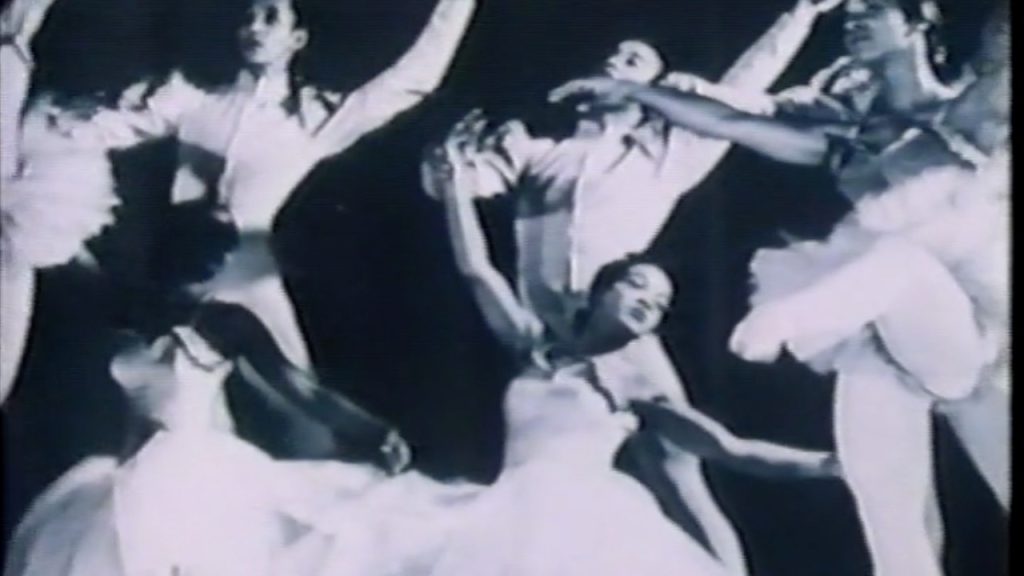
Thelma Hill did not wait for change; she created her own. Her love for ballet compelled her and dancer Ward Fleming to establish the New York Negro Ballet Company in 1954. (The same year of the United States Supreme Court ruled in favor of Brown vs the Board of Education and the formation of Mississippi’s White Citizen Council as a response to desegregation.) In 1959 she founded Clark Center with Alvin Ailey, establishing the first home of the Alvin Ailey American Dance Theater. And in 1976 she and Larry Phillips created a school in her beloved hometown borough of Brooklyn.

Hill did not have a dancer’s body but that did not stop her from developing a special heartfelt, soul filled stage presence. She understood the power of storytelling and her determination and self-exploration made her a powerful performer, mentor and teacher. Her untimely death in 1977 at age 53 sent the dance community into shock and deep remorse. Phillips honored his friend and mentor by renaming their dance organization the Thelma Hill Performing Arts Center (THPAC).

By the mid 1970’s the struggle had transitioned from the “We shall over overcome” of the 1960’s to the raised fist, “Say it loud. I’m Black and I’m proud” Afro era. This sparked renewed interest in W.E.B. Dubois’ 1903 self-determination manifesto, The Souls of Black Folks. Black dancers, choreographer, directors, visual artists, writers and composers responded with work embodying a spirt of renewed pride, defiance and purpose. Artists such as Romare Bearden, Melvin Van Peebles, Stevie Wonder, Gordon Parks, Maya Angelou, and James Baldwin helped bring “Blackness” mainstream. And Black dance was also finding its way into this new Black arts lexicon; unfortunately, there were very few presenters who showcased fledgling, emerging and even established black choreographers and companies. Phillips seized the moment.
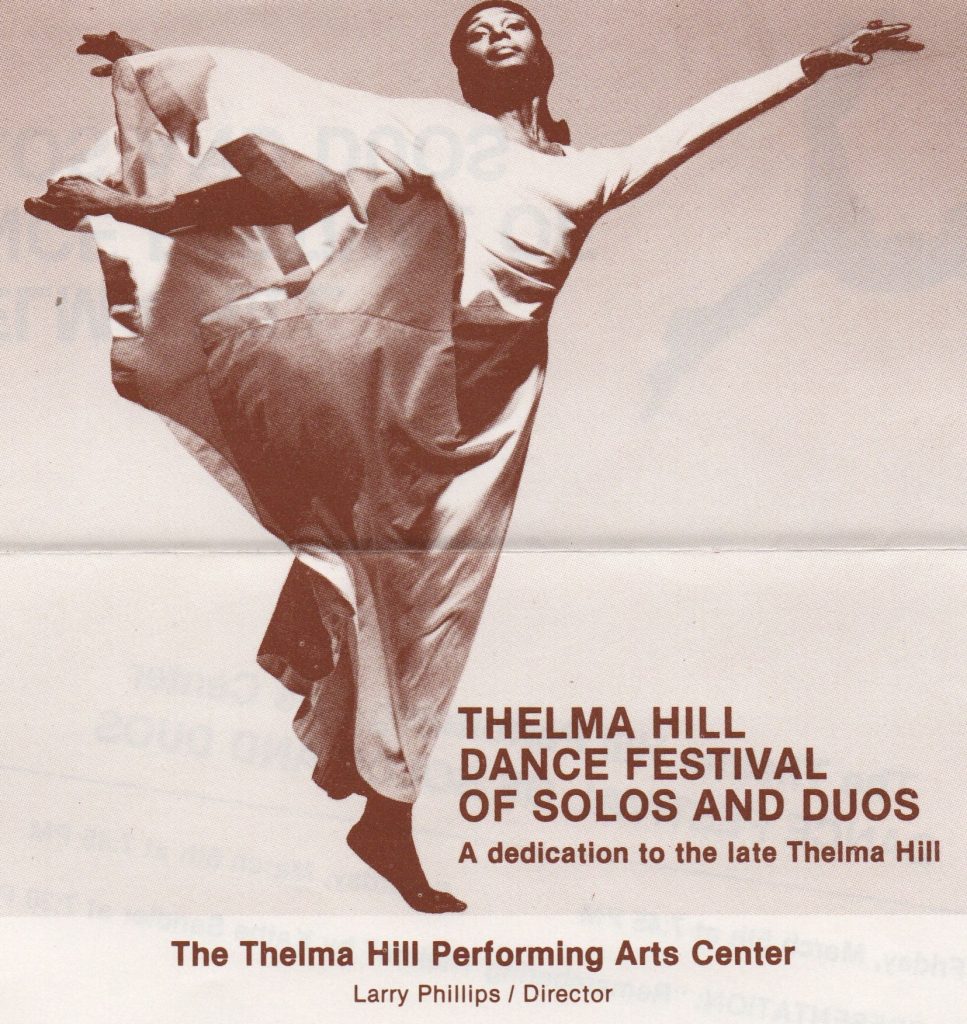
Phillips reached beyond Brooklyn to present a broad range of Black dance including established artists Maurice Hines, Clive Thompson, George Faison, Talley Beatty, Diane McIntyre, Loretta Abbott and Al Perryman; and emerging  companies including Dance Theatre of Harlem, Alvin Ailey American Dance Center Repetory Ensemble (Ailey II), Philadanco, Chuck Davis Dance Company, Fred Benjamin Dance Company, Nanette Bearden Contemporary Dance Theater, Jubilations! Dance Company. Phillips passed away at age 50 in 1987, just ten short years after his beloved friend and mentor.
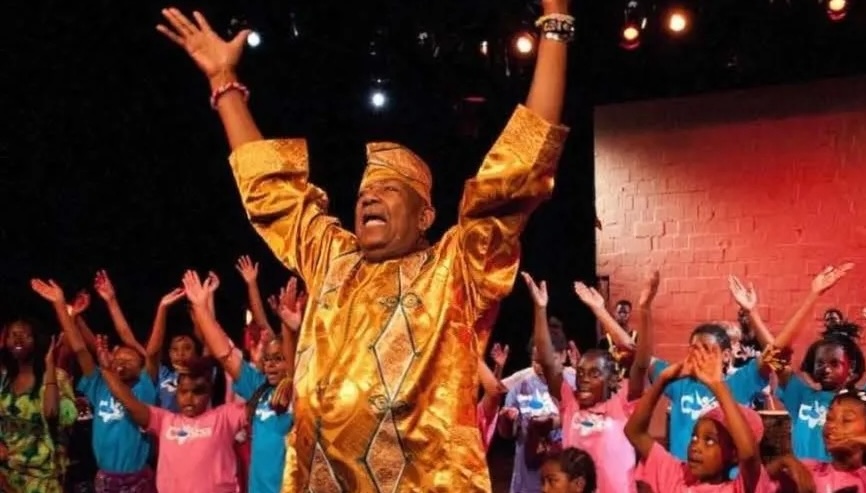
During Phillips last year Melvin Davis slowly began to take more responsibility and became the director by proxy. Davis capitalized on the momentum Phillips had created and the organization moved into an impressive era buoyed by the international dance boom of the 1980’s. Artists such as Abdel Salaam/ Forces of Nature Dance Company, Complexion Contemporary Ballet, Ronald K. Brown/Evidence, Eleo Pomare, Marlise Yearby, Garth Fagan’s Bottom of the Bucket Dance Company, Gary Deloatch, Urban Bush Women, and Edisa Weeks are among the many artists and companies showcased.

Davis also understood the changing times and the need for greater inclusivity and diversity in other underserved communities. He expanded the themes to include female choreographer showcases, gay and lesbian themed concerts, Latin and Asian choreographers and the emerging hip hop culture.

In 1995, eight years after taking charge, Davis died suddenly and the organization faced its toughest challenges. Debt ridden, unpaid taxes and the threat of losing its not-for-profit status Alex Smith Jr., the company’s graphic designer stepped forward to save THPAC. With no formal dance training (his dance resume consisted of weekends at the Paradise Garage) he and Marshall Swiney started what has become the company’s longest and most consistent part of THPAC’s legacy.

For over 30 years Executive Chairman Smith as served THPAC and the dance community. Continuing the legacy of presenting new and innovative choreographers such as Camille Brown, Kyle Abraham, Tommie Waheed-Evan, Christopher Huggins, Jamel Gaines, Ted Thomas and Tiffany Rea Fisher while sharing dance classics with the next generation of dance enthusiasts.

Joan Myers Brown Introducing Alex Smith Jr.

Smith’s years of commitment and dedication has propelled Thelma Hill Performing Arts Center into its fifth decade. His stalwart stewardship earned him a New York Dance and Performance Award (aka the Bessies) for Outstanding Service to the Field of Dance in 2016. In recent years Davis has begun writing and producing original dance productions including The Gospel According to THPAC, and a Ramp to Paradise. These two productions featured commissioned dancers, choreographers and directors; and are part of the organization’s expanded direction of offering original work conceived and produced by THPAC.
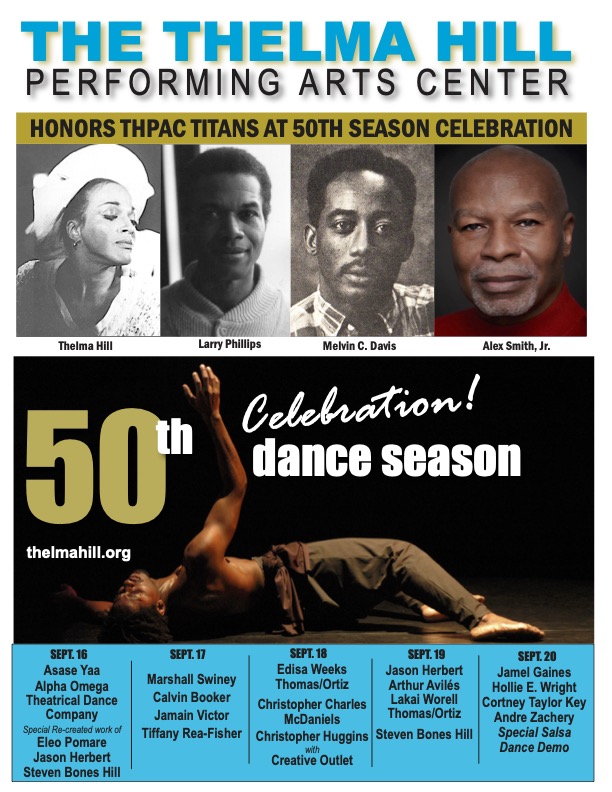
Additional 50th Anniversary events include a revival of Ramp to Paradise, the release of the Thelma Hill Performing Arts Center documentary film and a Southern tour of Gospel According to THPAC. Happy 50th Anniversary Thelma Hill Performing Arts Center! A truly golden moment.

For information and tickets visit: https://www.thelmahill.org/events
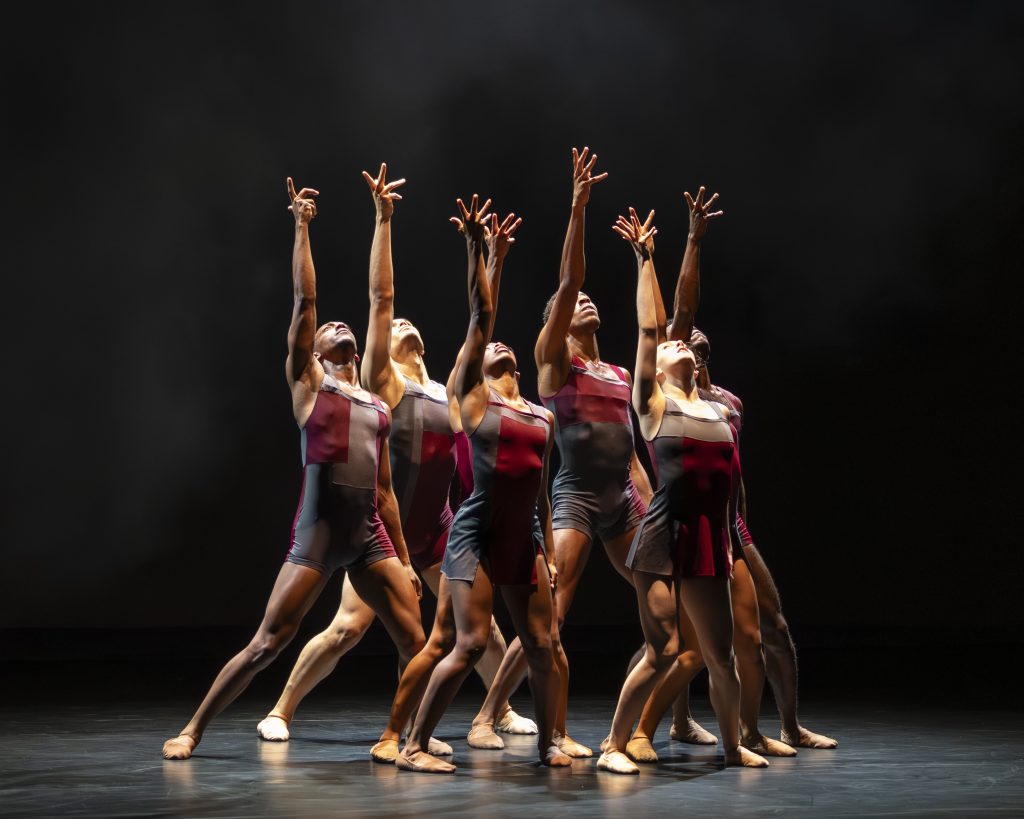
7/31/26 O&A NYC DANCE REVIEW BY WALTER RUTLEDGE: Philadanco – A Must See

By Walter Rutledge

Question: What do you get when you combine strong performers, stellar choreography and exceptional production elements? 
Answer: You get Philadanco! Continue reading

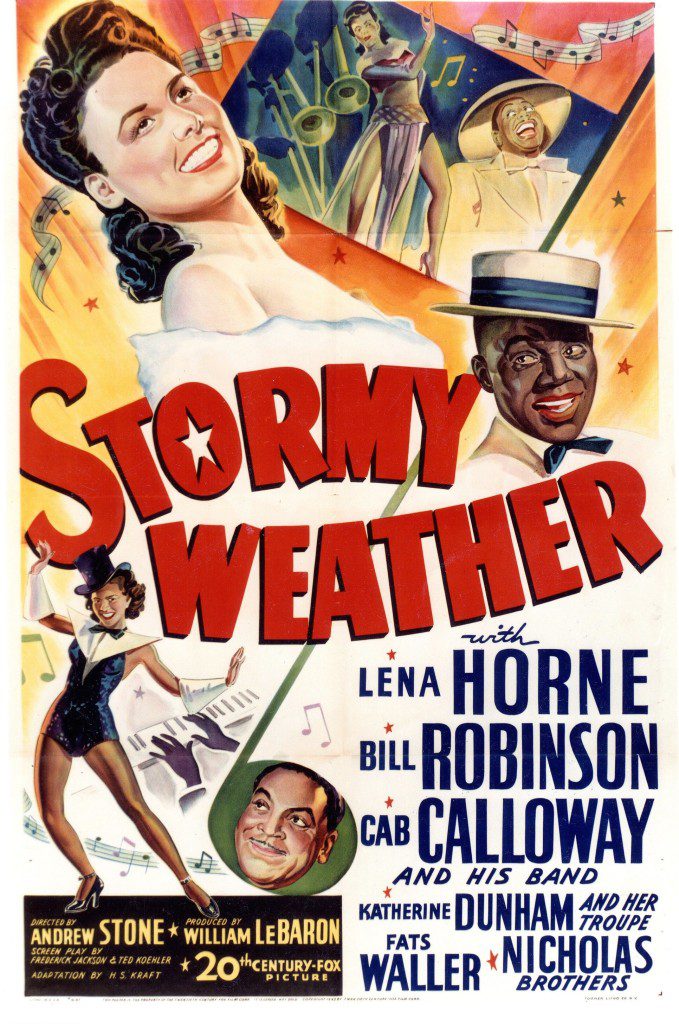
3/2/26 O&A NYC HOLLYWOOD MONDAY: Stormy Weather- Lena Horne, Bill “Bojangles” Robinson, Cab Calloway, Nicholas Brothers, Katherine Dunham and dancers

Stormy Weather is a 1943 film musical produced and released by 20th Century Fox. The movie is considered one of the best Hollywood musicals with an all African-American cast and serve to  showcase of some of the top African-American performers of the time. Continue reading

3/7/25 O&A NYC SHALL WE DANCE FRIDAY: Stormy Weather- Lena Horne, Bill “Bojangles” Robinson, Cab Calloway, Nicholas Brothers, Katherine Dunham and dancers

Shall We Dance Friday

Stormy Weather is a 1943 film musical produced and released by 20th Century Fox. The movie is considered one of the best Hollywood musicals with an all African-American cast and serve to  showcase of some of the top African-American performers of the time. Continue reading

8/23/24 O&A NYC SHALL WE DANCE FRIDAY: Happy Birthday Dudley Williams

By Walter Rutledge

Alvin Ailey dancer emeritus Dudley Williams would have celebrated his 85 birthday on August 18th. And although time is a very fickle and forgetful mistress Dudley remains of one the stars of the “Golden Age” of the Ailey company. His name is synonymous with dancers and choreographers such as Talley Beatty, John Butler, Louis Falco, George Faison, Miguel Godreau, Judith Jamison, Linda Kent, Kelvin Retardier,|Clive Thompson, Sara Yarborough, Estelle Spurlock and Donna Wood to name a few.

Continue reading

8/21/21 O&A NYC DIVO ALERT TRIBUTE: Faison, Godreau and Williams- Road of the Pheobe Snow

Divo Alert! George Faison, Miguel Godreau and Dudley Williams dance in an excerpt from Talley Beatty’s The Road Of The Pheobe Snow with the Alvin Ailey American Dance Theater. Continue reading

4/8/20 O&A NYC MAGAZINE: Remembering Louis Johnson

By Walter Rutledge

Louis Johnson’s passing marks the end of an era in Black dance. Johnson was the last of the of his generation of 20th century American choreographers of African descent and International renowned. His contemporaries, Alvin Ailey, Talley Beatty, Geoffrey Holder, Donald McKayle, and Arthur Mitchell, all forged through the restrictive Jim Crow era of hatred and segregation; that unfortunately included the arts- and dance. Continue reading

(Repost) 8/4/20 O&A NYC DIVA ALERT! RAINY DAY BONUS: Stormy Weather- Featuring Katherine Dunham And Her Dance Troupe

Stormy Weather is a 1943 film musical produced and released by 20th Century Fox. The movie is considered one of the best Hollywood musicals with an all African-American cast and serve to  showcase of some of the top African-American performers of the time. Continue reading
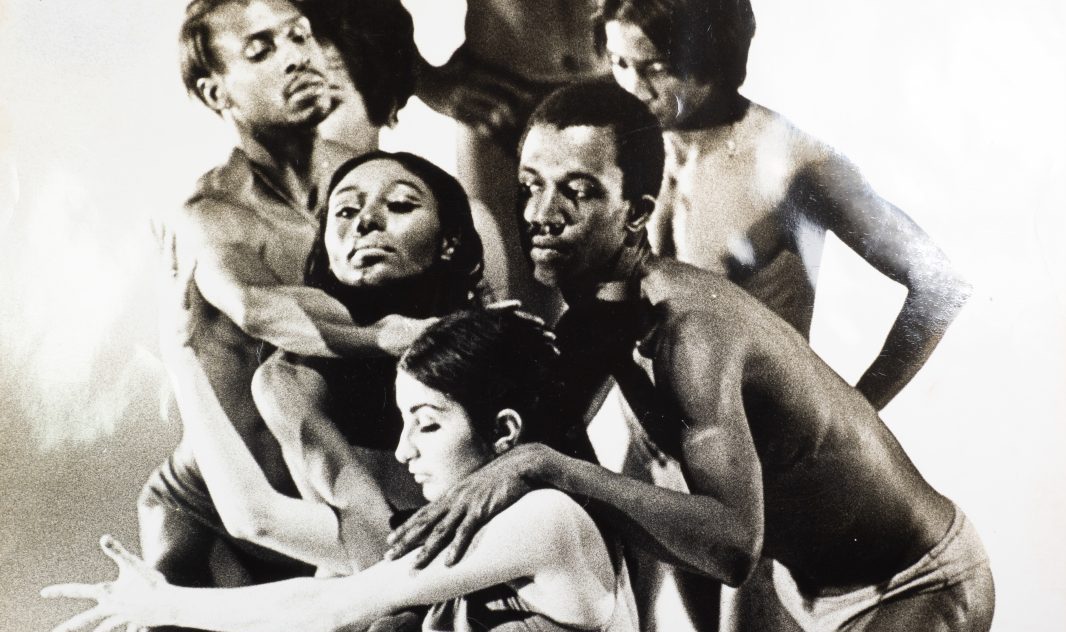
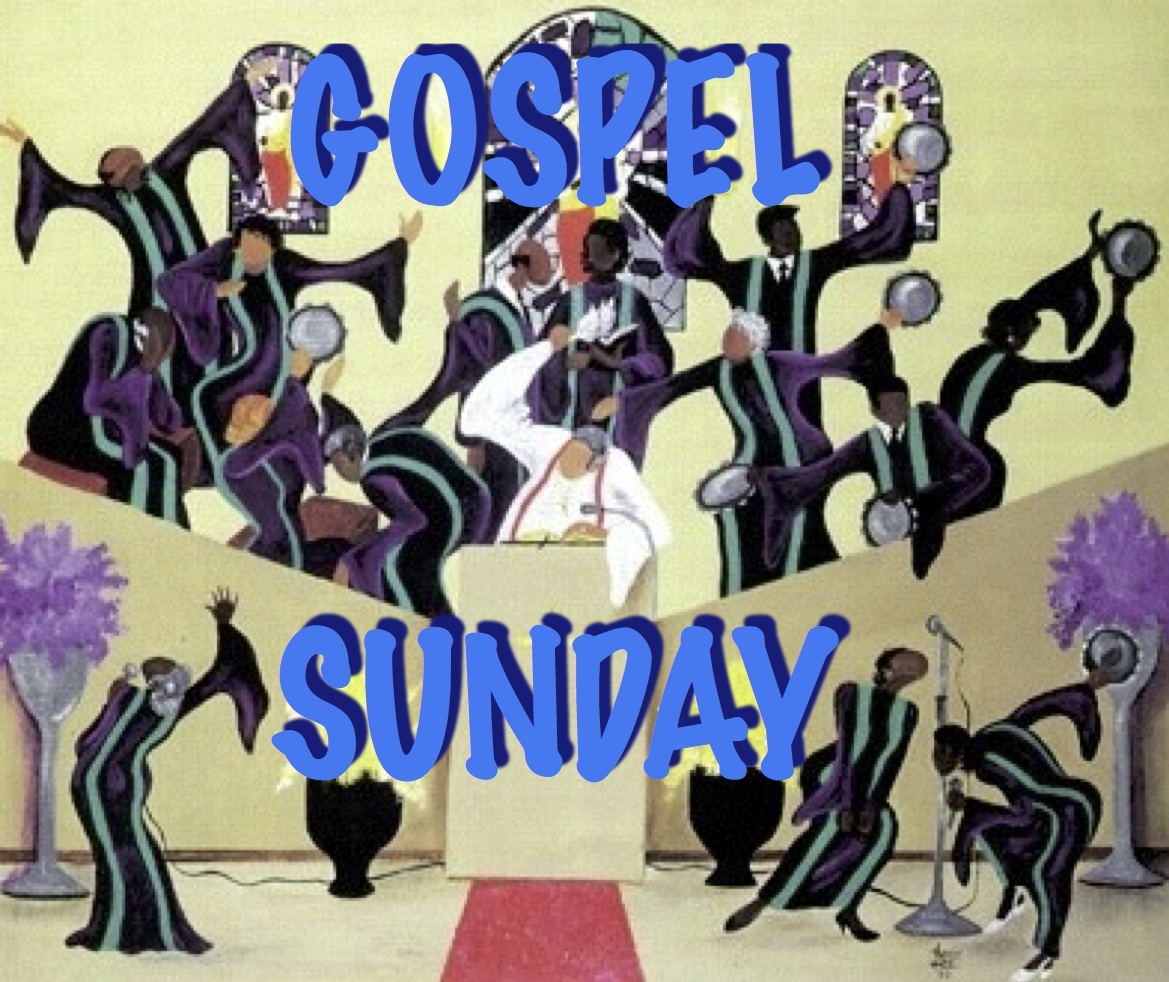
11/7/21 O&A NYC MORE GOSPEL SUNDAY: Mourner’s Bench- Talley Beatty Choreographer


mourn2Talley Beatty choreographed and performed Mourner’s Bench in 1947. It represents the anguish and loss for former slaves, now free men, killed during the Reconstruction Era at the beginning of the rise of the Klu Klux Klan. Beatty explained to me, “People were murdered by the Klan and at daybreak their relatives would find their bodies in the fields still covered in the morning dew.”

Continue reading

(REPORT) 10/6/20 O&A NYC BLACK HISTORY MONTH DANCE/REVIEW: Why Talley Beatty’s Stack Up Still Stacks Up

By Walter Rutledge

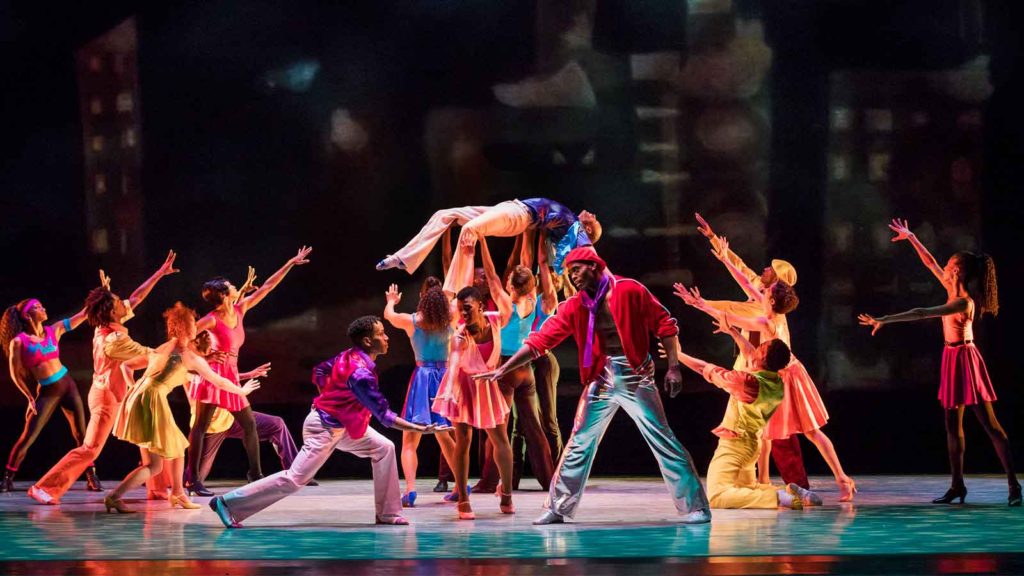
The Alvin Ailey American Dance Theater’s revival of Talley Beatty’s Stack Up became the undisputed hit of the 2018 New York City season. This posed the question, “What makes a dance a masterwork?” In other words, why does Stack Up still stack up?

Part of the answer is the most unforgiving four-letter word in the English vocabulary TIME. Today in our fast-paced world with its changing social attitudes, need for immediate gratification and public acceptance, has virtually eliminated the critical maturation period. This is the time it takes the public (and critics) to develop the aesthetic acumen to understand and acknowledge that they are in the midst of something new, different and profoundly groundbreaking.

Created for the Alvin Ailey American Dance Theater in 1983 Stack Up become an immediate hit. Jennifer Dunning reviewed Stack Up during the 1983 Ailey 25 season, “Mr. Beatty’s tale of lost innocence is as fresh as if it were being told for the first time.” Now 36 years later Dunning’s comments still ring true; Stack Up had retained a freshness and renewed relevance.

Another element of the ballets’ sustained appeal is Beatty’s innate skill as a movement architect and storyteller. A master craftsmen, Stack Up is visually stunning from every seat in the New York City Center’s proscenium house. Even in the fourth tier the patterns move with the precision of a swiss watch.

The textured construction of the choreography included multiple layered movement sequences happening simultaneously. This created primary action, and both secondary and background movement similar to the configurations used in story ballet classics. Despite Beatty’s repute the success of Stack Up sparked an unexpected comeback.

At age 64 Beatty had achieved choreographic acclaim over two decades earlier with his masterwork The Road Of The Phoebe Snow (1959). Despite his 1977 Tony nomination for Arms Too Short To Box With God, and several ballets in the Ailey repertoire, by the early 80’s Beatty had become a dance dinosaur. Artists such as Elisa Monte (Treading 1981, Pigs and Fishes 1982), Bill T. Jones (Fever Swamp 1983) and Ulysses Dove (Night Shade 1982) had captured the public’s curiosity, forging new ground; while relegating Beatty to the past. The success of  Stack Up revived Beatty’s career with a Frank Lloyd Wright vengeance.

Beatty returned to the loss of innocence theme that propelled The Road Of The Phoebe Snow. Set with a soulful Westside Story flavor “Phoebe” centered around a young men and women who encounter gang violence. In Stack Up the male and female leads are confronted by a drug dealer while navigating the New York City underground club scene. Beatty did not relive his “Phoebe” glory, to the contrary, he did his research to create a new work for a new generation and a new audience.

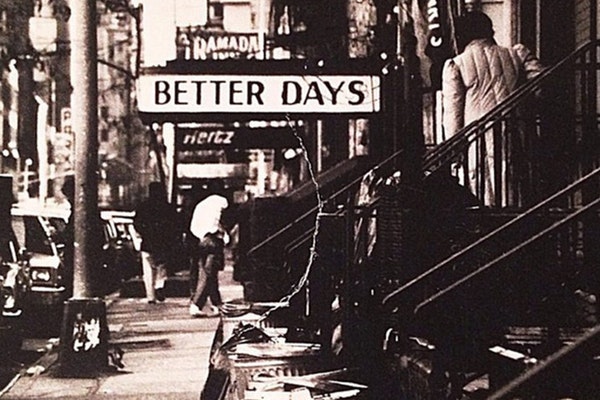
Better Days, a predominantly Black and Latino gay night spot, renowned for great music, dancing, drinking and plenty of shade. It’s tucked away on 49th Street between 8th and 9th Avenue, an area notorious for strip clubs, prostitution and rat-infested tenements. The diminutive, but fearless sexagenarian (Beatty) became a fixture/voyeur at the club.

Beatty soaked up the music, dancing and atmosphere of the club and neighborhood. Social dances such as the Hustle and emerging hip-hop styles were deconstructed and eventually incorporated into his choreography. In retrospect this was the beginning of the end of an era. The club scene with its rampant drugs use, transient sex and outlandish behavior would eventually be eclipsed by the crack cocaine explosion and the AIDS pandemic.

As the curtain rose on the current production, the Romare Bearden backdrop based on his watercolor Under The Bridge brought us into Beatty’s gritty urban environment. The Bearden backdrop (part a series featured in the 1980 John Cassavetes film Gloria) seemed a little faded and in need of sprucing up. Fortunately, this was the only element of this production in need of a facelift.

From the moment the curtain rises we are immediately pulled into the hustle and flow of the vibrant NYC night culture. Dancers spilled onto the stage introducing themselves; and immediately establishing their characters through both movement and attitude. All with the kind of aplomb best described as “urban cool”.

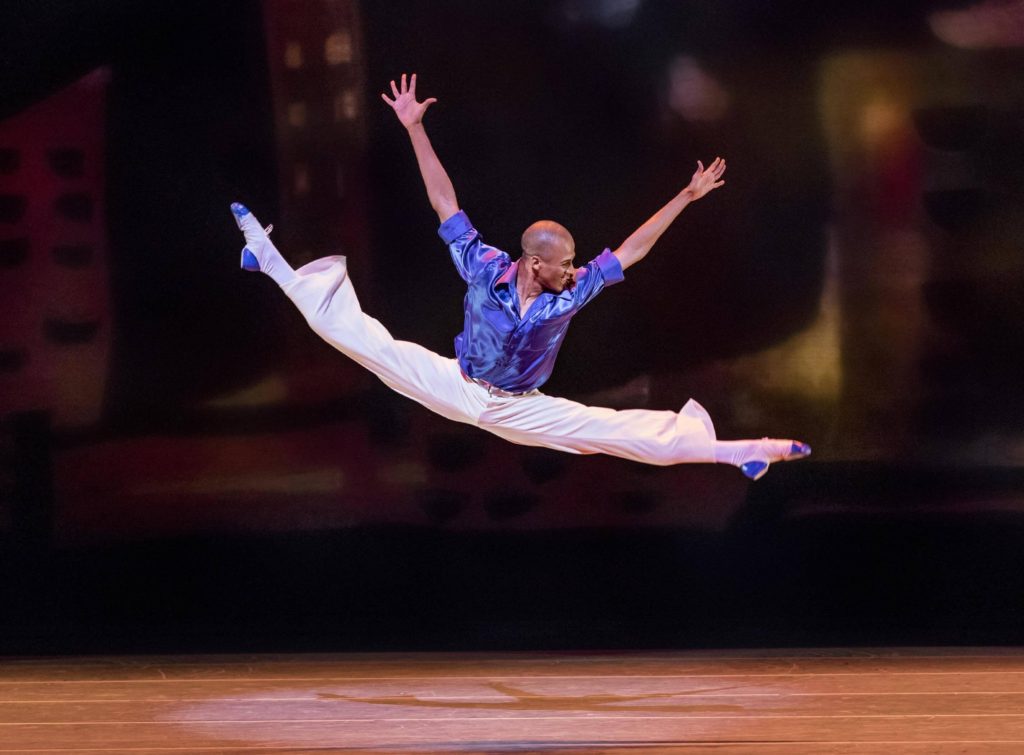
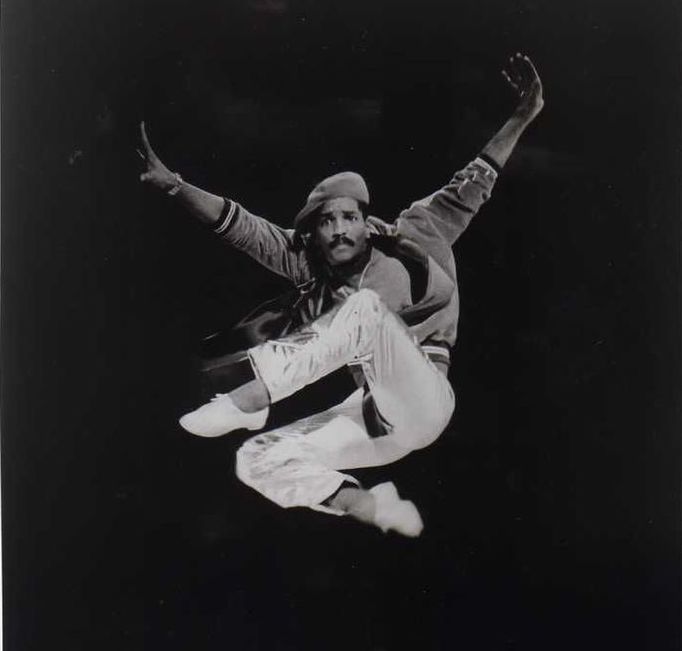
Yannick Labrun and Constance Stamatiou, the young couple emerged from the chaotic, but deliberate movement mayhem. Originally performed by a hunky Keith McDaniel the tall, lean Labrun made the role his own. With a “wide-eyed” sense of innocence and exuberance abounding, this danseur noble took us on a journey (no… his journey) of seduction and betrayal.

Stamatiou’s impassioned interpretation is much less an ingenue, and more protector and futile voice of reason. Michael Jackson Jr. brought a special energy to the role of the drug dealer. His energetic, yet multi-faceted portrayal revived images of the role’s originator Gary DeLoatch. Ranging from an almost manic “life of the party” ringmaster to an alone and poignant addict, Jackson Jr.’s antagonist evoked both disdain and pathos.

The second section opened with Rockin It, old school hip-hop from the Fearless Four. The dancer’s heads popped through the black backdrop playfully bopped side to side. Just one of the many ingenious theatrical devices that kept the audience “on their toes”.

With an amalgam of movement styles including; Dunham, Graham, Ballet, Jazz and current street/vernacular dances, the Louisiana native created an exciting dance “Gumbo”. The abstract narrative ebbed and flowed like a theatrical rollercoaster of falling and rise action. This was balanced by Beatty’s strong dance theatre prowess; which helped him develop complete and believable characters, and clear and concise scenarios. Standout Jermaine Terry’s subtle and focused portrayal of a little too high street character was spot on! His endearing sense of humor complimented without upstaging.

The final scene takes us to the club complete with a disco mainstay mirror ball. Beatty masterfully builds the work to a frenzied crescendo, ending with an arresting final tableau- blackout! Encompassing the four elements of good storytelling; intrigue, seduction, betrayal and mysticism, Stack Up remains a powerful social commentary, made more prevalent due to the present Opioid crisis.

Alvin Ailey American Dance Theater: The Stack-Up

To watch click YouTube link below